| |
Charcacter Name:
Species:
Class:
Subclass:
Background:
LEVEL
XP
Armour Class (AC)
Shield?
HIT POINTS
Current
temp
MAX
HIT DICE
Spent
MAX
PROFICIENCY BONUS:
STRENGTH:
Modifier:
Saving Throw:
-----Athletics:
DEXTERITY:
Modifier:
Saving Throw:
-----Acrobatics:
-----Sleight of Hand:
-----Stealth:
CONSTITUTION:
Modifier:
Saving Throw:
INTELLIGENCE:
Modifier:
Saving Throw:
-----Arcana:
-----History:
-----Investigation:
-----Nature:
-----Religion:
WISDOM:
Modifier:
Saving Throw:
-----Animal Handling:
-----Insight:
-----Medicine:
-----Perception:
-----Survival:
CHARISMA:
Modifier:
Saving Throw:
-----Deception:
-----Intimidation:
-----Performance:
-----Persuasion:
EQUIPMENT TRAINING & PROFICIENCIES
ARMOR TRAINING
Light: 0
Medium: 0
Heavy: 0
Shields: 0
Weapons:
Tools:
INITIATIVE:
SPEED:
SIZE:
PASSIVE PERCEPTION:
x
WEAPONS & DAMAGE CANTRIPS
Name:
Atk Bonus/DC:
Damage & Type:
Notes:
x
x
x
x
x
x
x
x
x
CLASS FEATURES:
SPECIES TRAITS:
FEATS:
x
Spellcasting Ability:
Spellcasting Modifier:
Spell Save DC:
Spell Attack Bonus:
SPELL SLOTS
Level 1: 0 0 0 0
Level 2: 0 0 0
Level 3: 0 0 0
Level 4: 0 0 0
Level 5: 0 0 0
Level 6: 0 0
Level 7: 0 0
Level 8: 0
Level 9: 0
CANTRIPS & PREPARED SPELLS
Level:
Name:
Casting Time:
Range
Concentration:
Ritual:
Required Material:
Notes:
APPEARANCE:
BACKSTORY & PERSONALITY:
Alignment:
Languages:
EQUIPMENT:
Magic Item Attunement:
-
-
-
COINS
IP:
CP:
SP:
EP:
GP:
PP:
|
|
x) Choose your Characters Name.
STEP 1: CHOOSE A CLASS
x) Choose your Class.
| Class |
Likes... |
Primary Ability |
Complexity |
| Barbarian |
Battle |
Strength |
Average |
| Bard |
Performing |
Charisma |
High |
| Cleric |
Gods |
Wisdom |
Average |
| Druid |
Nature |
Wisdom |
High |
| Fighter |
Weapons |
Strength or Dexterity |
Low |
| Monk |
Unarmed Combat |
Dexterity and Wisdom |
High |
| Paladin |
Defense |
Strength and Charisma |
Average |
| Ranger |
Survival |
Dexterity and Wisdom |
Average |
| Rogue |
Stealth |
Dexterity |
Low |
| Sorcerer |
Power |
Charisma |
High |
| Warlock |
Occult Lore |
Charisma |
High |
| Wizard |
Spellbooks |
Intelligence |
Average |
x) Write your Level.
x) Write your XP..
| Level |
XP |
Proficiency Bonus |
| 1 |
0 |
+2 |
| 2 |
300 |
+2 |
| 3 |
900 |
+2 |
| 4 |
2,700 |
+2 |
| 5 |
6,500 |
+3 |
| 6 |
14,000 |
+3 |
| 7 |
23,000 |
+3 |
| 8 |
34,000 |
+3 |
| 9 |
48,000 |
+4 |
| 10 |
64,000 |
+4 |
| 11 |
85,000 |
+4 |
| 12 |
100,000 |
+4 |
| 13 |
120,000 |
+5 |
| 14 |
140,000 |
+5 |
| 15 |
165,000 |
+5 |
| 16 |
195,000 |
+5 |
| 17 |
225,000 |
+6 |
| 18 |
265,000 |
+6 |
| 19 |
305,000 |
+6 |
| 20 |
355,000 |
+6 |
x) Write your chosen sublcass: If you are starting at level 3 or higher.
x) Note your Armor Training. Light, Medium, Heavy. Shields.
STEP 2: DETERMINE ORIGIN
x) Choose a Background.
Acolyte
Artisan
Charlatan
Criminal
Entertainer
Farmer |
Guard
Guide
Hermit
Merchant
Noble
Sage
|
Sailor
Scribe
Soldier
Wayfarer |
| Ability |
Backgrounds |
| Strength |
Artisan, Entertainer, Farmer, Guard,
Noble, Sailor, Soldier |
| Dexterity |
Artisan, Charlatan, Criminal, Entertainer,
Guide, Sailor, Scribe, Soldier, Wayfarer |
| Constitution |
Charlatan, Criminal, Farmer, Guide,
Hermit, Merchant, Sage, Soldier |
| Intelligence |
Acolyte, Artisan, Criminal, Guard,
Merchant, Noble, Sage, Scribe |
| Wisdom |
Acolyte, Farmer, Guard, Guide,
Hermit, Sage, Sailor, Scribe, Wayfarer |
| Charisma |
Acolyte, Charlatan, Entertainer,
Hermit, Merchant, Noble, Wayfarer |
BACKGROUNDS
ACYOLTE
Ability Scores: Intelligence, Wisdom, Charisma
Feat: Magic Initiate (Cleric) (see chapter 5)
Skill Proficiencies: Insight and Religion
Tool Proficiency: Calligrapher's Supplies
Equipment: Choose A or B:
(A) Calligrapher's Supplies, Book (prayers), Holy Symbol, Parchment (10
sheets), Robe, 8 GP; or
(B) 50 GP
|
ARTISAN
Ability Scores: Strength, Dexterity, Intelligence
Feat: Crafter (see chapter 5)
Skill Proficiencies: Investigation and Persuasion
Tool Proficiency: Choose one kind of Artisan's Tools (see
chapter 6)
Equipment: Choose A or B:
(A) Artisan's Tools (same as above), 2 Pouches, Traveler's Clothes, 32 GP; or
(B) 50 GP
|
CHARLATAN
Ability Scores: Dexterity, Constitution , Charisma
Feat: Skilled (see chapter 5)
Skill Proficiencies: Deception and Sleight of Hand
Tool Proficiency: Forgery Kit
Equipment: Choose A or B:
(A) Forgery Kit , Costume,Fine Clothes, 15 GP; or
(B) 50 GP
|
CRIMINAL
Ability Scores: Dexterity, Constitution, Intelligence
Feat: Alert (see chapter 5)
Skill Proficiencies: Sleight of Hand and Stealth
Tool Proficiency: Thieves' Tools
Equipment: Choose A or B:
(A) 2 Daggers, Thieves' Tools, Crowbar, 2 Pouches, Traveler's Clothes, 16 GP; or
(B) 50 GP
|
ENTERTAINER
Ability Scores: Strength, Dexterity, Charisma
Feat: Musician (see chapter 5)
Skill Proficiencies: Acrobatics and Performance
Tool Proficiency: Choose one kind of Musical Instrument (see chapter 6)
Equipment: Choose A or B:
(A) Musical Instrument (same as above), 2 Costumes, Mirror, Perfume, Traveler's Clothes, 11 GP; or
(B) 50 GP
|
FARMER
Ability Scores: Strength, Constitution, Wisdom
Feat: Tough (see chapter 5)
Skill Proficiencies: Animal Handling and Nature
Tool Proficiency: Carpenter's Tools
Equipment: Choose A or B:
(A) Sickle, Carpenter's Tools, Healer's Kit, Iron Pot, Shovel, Traveler's
Clothes, 30 GP; or
(B) 50 GP
|
GUARD
Ability Scores: Strength , Intelligence, Wisdom
Feat: Alert (see chapter 5)
Skill Proficiencies: Athletics and Perception
Tool Proficiency: Choose one kind of Gaming Set (see chapter 6)
Equipment: Choose A or B:
(A) Spear, Light Crossbow, 20 Bolts, Gaming Set (same as above) , Hooded Lantern , Manacles, Quiver, Traveler's Clothes, 12 GP; or
(B) 50 GP
|
GUIDE
Ability Scores: Dexterity, Constitution, Wisdom
Feat: Magic Initiate (Druid) (see chapter 5)
Skill Proficiencies: Stealth and Survival
Tool Proficiency: Cartographer's Tools
Equipment: Choose A or B:
(A) Shortbow, 20 Arrows, Cartographer's Tools, Bedroll, Quiver, Tent, Traveler's Clothes, 3 GP; or
(B) 50 GP
|
HERMIT
Ability Scores: Constitution, Wisdom, Charisma
Feat: Healer (see chapter 5)
Skill Proficiencies: Medicine and Religion
Tool Proficiency: Herbalism Kit
Equipment: Choose A or B:
(A) Quarterstaff, Herbalism Kit, Bedroll, Book (philosophy), Lamp, Oil (3 flasks), Traveler's Clothes, 16 GP; or
(B) 50 GP
|
MERCHANT
Ability Scores: Constitution, Intelligence, Charisma
Feat: Lucky (see chapter 5)
Skill Proficiencies: Animal Handling and Persuasion
Tool Proficiency: Navigator's Tools
Equipment: Choose A or B:
(A) Navigator's Tools, 2 Pouches, Traveler's Clothes, 22 GP; or
(B) 50 GP
|
NOBLE
Ability Scores: Strength, Intelligence, Charisma
Feat: Skilled (see chapter 5)
Skill Proficiencies: History and Persuasion
Tool Proficiency: Choose one kind of Gaming Set (see chapter 6)
Equipment: Choose A or B:
(A) Gaming Set (same as above) , Fine Clothes, Perfume, 29 GP; or
(B) 50 GP
|
SAGE
Ability Scores: Constitution , Intelligence, Wisdom
Feat: Magic Initiate (Wizard) (see chapter 5)
Skill Proficiencies: Arcana and History
Tool Proficiency: Calligrapher's Supplies
Equipment: Choose A or B:
(A) Quarterstaff, Calligrapher's Supplies, Book (history), Parchment (8 sheets), Robe, 8 GP; or
(B) 50 GP
|
SAILOR
Ability Scores: Strength, Dexterity, Wisdom
Feat: Tavern Brawler (see chapter 5)
Skill Proficiencies: Acrobatics and Perception
Tool Proficiency: Navigator's Tools
Equipment: Choose A or B:
(A) Dagger, Navigator's Tools, Rope, Traveler's Clothes, 20 GP; or
(B) 50 GP
|
SCRIBE
Ability Scores: Dexterity, Intelligence, Wisdom
Feat: Skilled (see chapter 5)
Skill Proficiencies: Investigation and Perception
Tool Proficiency: Calligrapher's Supplies
Equipment: Choose A or B:
(A) Calligrapher's Supplies, Fine Clothes, Lamp, Oil (3 flasks), Parchment (12 sheets), 23 GP; or
(B) 50 GP
|
SOLDIER
Ability Scores: Strength, Dexterity, Constitution
Feat: Savage Attacker (see chapter 5)
Skill Proficiencies: Athletics and Intimidation
Tool Proficiency: Choose one kind of Gaming Set (see chapter 6)
Equipment: Choose A or B:
(A) Spear, Shortbow, 20 Arrows, Gaming Set (same as above), Healer's Kit, Quiver, Traveler's Clothes, 14 GP; or
(B) 50 GP
|
WAYFARER
Ability Scores: Dexterity, Wisdom, Charisma
Feat: Lucky (see chapter 5)
Skill Proficiencies: Insight and Stealth
Tool Proficiency: Thieves' Tools
Equipment: Choose A or B:
(A) 2 Daggers, Thieves' Tools, Gaming Set (any), Bedroll, 2 Pouches, Traveler's Clothes, 16 GP; or
(B) 50 GP
|
x) Record your Feat.
x) Note Proficiencies from both Background and Class.
x) Choose Starting Equipment:
-Any Coins acquired from you background and class can now be spent to purchase equipment from Chapter 6
-Roll a d100 and and collect one item from the Trinkets list at no cost.
-Record your chosen equipment.
-Note any coins you have left.
x) Choose a Species.
Default Races: Aasimar, Dragonborn, Dwarf, Elf, Gnome, Goliath, Half-Elf, Half-Orc, Halfling, Human, Orc, Tiefling
Exotic Races: Cervan (Deerfolk), Firbolg, Harengon (Rabbitfolk), Kenku, Leonin (Lionfolk), Locathah (fishfolk), Loxodon (Elephantfolk), Satyr, Svirfneblin (Deep Gnome), Tabaxi, Tortle, Warforged.
Monstrous Races: Goblin, Kobold, Lizardfolk.
Homebrew Races: Felis (Tabaxi Halfling).
-frogfolk (grung, bullywug) ?
-Birdfolk*
DEFAULT RACES |
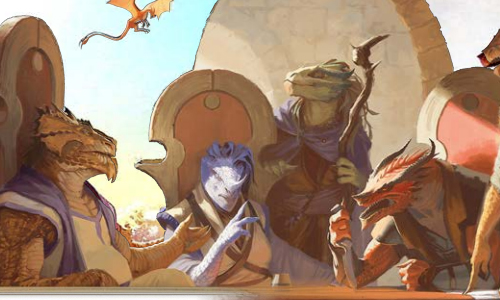
DRAGONBORN
Creature Type: Humanoid
Age: Young dragonborn grow quickly. They walk hours after hatching, attain the size and development of a 10-year-old human child by the age of 3, and reach adulthood by 15. They live to be around 80.
Alignment: Dragonborn tend towards extremes, making a conscious choice for one side or the other between Good and Evil (represented by Bahamut and Tiamat, respectively). More side with Bahamut than Tiamat (whose non-dragon followers are mostly kobolds), but villainous dragonborn can be quite terrible indeed. Some rare few choose to devote themselves to lesser dragon deities, such as Chronepsis (Neutral), and fewer still choose to worship Io, the Ninefold Dragon, who is all alignments at once.
Background: The ancestors of dragonborn hatched from the eggs of chromatic and metallic dragons. One story holds that these eggs were blessed by the dragon
gods Bahamut and Tiamat, who wanted to populate the multiverse with people created in their image. Another story claims that dragons created the first dragonborn without the gods' blessings. Whatever their origin, dragonborn have made homes for themselves on the Material Plane.
Dragonborn look like wingless, bipedal dragonsscaly, bright-eyed, and thick-boned with horns on their heads-and their coloration and other features are reminiscent of their draconic ancestors.
Size: Dragonborn are taller and heavier than humans, standing between 5 and 7 feet tall. Your size is Medium.
Speed: 30 feet
Special Traits
Ability Score Increase: Your Strength score increases by 2, and your Charisma score increases by 1.
As a Dragonborn, you have these special traits.
Draconic Ancestry. Your lineage stems from a dragon progenitor. Choose the kind of dragon from the Draconic Ancestors table. Your choice affects your Brea th Weapon and Damage Resistance traits as well as your appearance.
| Dragon |
Damage Type |
| Black |
Acid |
| Blue |
Lightning |
| Brass |
Fire |
| Bronze |
Lightning |
| Copper |
Acid |
|
| Dragon |
Damage Type |
| Gold |
Fire |
| Green |
Poison |
| Red |
Fire |
| Silver |
Cold |
| White |
cold |
|
Breath Weapon: When you take the Attack action on your turn, you can replace one of your attacks with an exhalation of magical energy in either a 15-foot Cone or a 30-foot Line that is 5 feet wide (choose the shape each time). Each creature in that area must make a Dexterity saving throw (DC 8 plus your Constitution modifier and Proficiency Bonus). On a failed save, a creature takes ldl0 damage of the type determined by your Draconic Ancestry trait. On a successful save, a creature takes half as much damage. This damage increases by ld10 when you reach character levels 5 (2d10), 11 (3d10), and 17 (4d10).
You can use this Breath Weapon a number of times equal to your Proficiency Bonus, and you regain all expended uses when you finish a Long Rest.
Damage Resistance: You have Resistance to the damage type determined by your Draconic Ancestry trait.
Dark Vision: You can see in dim light within 60 feet of you as if it were bright light and in darkness as if it were dim light. You can’t discern color in darkness, only shades of gray.
Draconic Flight: When you reach character level 5, you can channel draconic magic to give yourself temporary flight. As a Bonus Action, you sprout spectral wings on your back that last for 10 minutes or until you retract the wings (no action required) or have the Incapacitated condition. During that time, you have a Fly Speed equal to your Speed. Your wings appear to be made of the same energy as your Breath Weapon. Once you use this trait, you can't use it again until you finish a Long Rest.
Languages: You can read, speak, and write Common and Draconic.
|
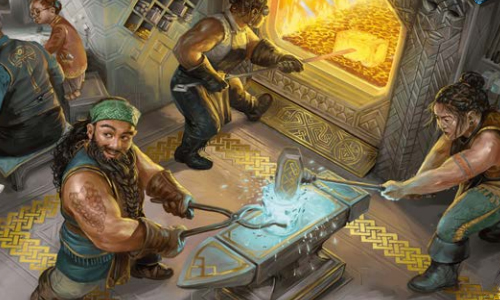
DWARF
Creature Type: Humanoid
Age: Dwarves mature at the same rate as humans, but they're considered young until they reach the age of 50. On average, they live about 350 years.
Alignment: Most dwarves are lawful, believing firmly in the benefits of a well-ordered society. They tend toward good as well, with a strong sense of fair play and a belief that everyone deserves to share in the benefits of a just order.
Background: Dwarves were raised from the earth in the elder days by a deity of the forge. Called by various names on different worlds-Morad in, Reorx, and others-that god gave dwarves an affinity for stone and metal and for living underground. The god also made them resilient like the mountains, with a life span of about 350 years.
Squat and often bearded, the original dwarves carved cities and strongholds into mountainsides and under the earth. Their oldest legends tell of conflicts with the monsters of mountaintops and the Underdark, whether those monsters were towering giants or subterranean horrors. Inspired by those tales, dwarves of any culture often sing of valorous deeds-especially of the little overcoming the mighty.
On some worlds in the multiverse, the first settlements of dwarves were built in hills or mountains, and the families who trace their ancestry to those settlements call themselves hill dwarves or mountain dwarves, respectively. The Greyhawk and Dragonlance settings have such communities.
Size: Medium (about 4-5 feet tall)
Speed: 30 feet.
Special Traits
Ability Score Increase: Your Constitution score increases by 2.
Dark Vision: You can see in dim light within 60 feet of you as if it were bright light and in darkness as if it were dim light. You can’t discern color in darkness, only shades of gray.
Dwarven Resilience: You have Resistance to Poison damage. You also have Advantage on saving throws you make to avoid or end the Poisoned condition.
Dwarven Toughness: Your Hit Point maximum increases by 1, and it increases by 1 again whenever you gain a level.
Stonecunning: As a Bonus Action, you gain Tremorsense with a range of 60 feet for 10 minutes. You must be on a stone surface or touching a stone surface to use this Tremorsense. The stone can be natural or worked.
You can use this Bonus Action a number of times equal to your Proficiency Bonus, and you regain all expended uses when you finish a Long Rest.
Languages: You can speak, read, and write Common and Dwarvish. Dwarvish is full of hard consonants and guttural sounds, and those characteristics spill over into whatever other language a dwarf might speak.
|
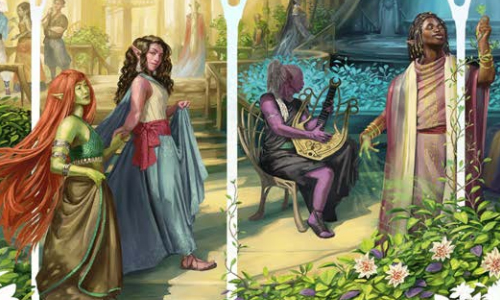
ELF
Creature Type: Humanoid.
Age: Although elves reach physical maturity at about the same age as humans, the elven understanding of adulthood goes beyond physical growth to encompass worldly experience. An elf typically claims adulthood and an adult name around the age of 100 and can live to be 750 years old.
Alignment: Elves love freedom, variety, and self-expression, so they lean strongly towards the gentler aspects of chaos. They value and protect others' freedom as well as their own, and are good more often than not. Drow are an exception; their exile into the Underdark has made them vicious and dangerous. Drow are more often evil than not.
Background: Created by the god Corellon, the first elves could change their forms at will. They lost this ability when Corellon cursed them for plotting with the deity Lolth, who tried and failed to usurp Corellon's dominion . When Lolth was cast into the Abyss, most elves renounced her and earned Corellon's forgiveness, but that which Corellon had taken from them was lost forever.
No longer able to shape-shift at will, the elves retreated to the Feywild, where their sorrow was deepened by that plane's influence. Over time, curiosity led many of them to explore other planes of existence, including worlds in the Material Plane.
Elves have pointed ears and lack facial and body hair. They live for around 750 years, and they don't
sleep but instead enter a trance when they need to rest. In that state, they remain aware of their surroundings while immersing themselves in memories and meditations.
An environment subtly transforms elves after they inhabit it for a millennium or more, and it grants them certain kinds of magic. Drow, high elves, and wood elves are examples of elves who have been transformed thus.
Drow: Drow typically dwell in the Underdark and have been shaped by it. Some drow individuals and societies avoid the Underdark altogether yet carry its magic. In the Eberron setting, for example, drow dwell in rainforests and cyclopean ruins on the continent of Xen'drik.
High Elves: High elves have been infused with the magic of crossings between the FeY'vild and the Material Plane. On some worlds, high elves refer to themselves by other names. For example, they call themselves sun or moon elves in the Forgotten Realms setting, Silvanesti and Qualinesti in the Dragonlance setting, and Aereni in the Eberron setting.
Wood Elves: Wood elves carry the magic of primeval forests within themselves. They are known by many other names, including wild elves, green elves, and forest elves. Grugach are reclusive wood elves of the Greyhawk setting, while the Kagonesti and the Tairnadal are wood elves of the Dragonlance and Eberron settings, respectively.
Size: Elves range from under 5 to over 6 feet tall and have slender builds. Your size is Medium.
Speed: 30 feet.
Special Traits
Ability Score Increase: Your Dexterity score increases by 2.
Dark Vision: You can see in dim light within 60 feet of you as if it were bright light and in darkness as if it were dim light. You can’t discern color in darkness, only shades of gray.
Elven Lineage: You are part of a lineage that grants you supernatural abilities. Choose a lineage from the Elven Lineages table. You gain the level 1 benefit of that lineage.
When you reach character levels 3 and 5, you learn a higher-level spell, as shown on the table. You always have that spell prepared. You can cast it once without a spell slot, and you regain the ability to cast it in that way when you finish a Long Rest. You can also cast the spell using any spell slots you have of the appropriate level.
Intelligence, Wisdom, or Charisma is your spellcasting ability for the spells you cast with this trait (choose the ability when you select the lineage).
| Lineage |
Level 1 |
Level 3 |
Level 5 |
| Drow |
The range of your Darkvision increases to 120 feet. You also know the Dancing Lights cantrip. |
Faerie Fire |
Darkness |
| High Elf |
You know the Prestidigitation cantrip. Whenever you finish a Long Rest, you can replace that cantrip with a different cantrip from the Wizard spell list |
Detect Magic |
Misty Step |
| Wood Elf |
Your Speed increases to 35 feet. You also know the Druidcraft cantrip. |
Longstrider |
Pass Without Trace |
Fey Ancestry: You have Advantage on saving throws you make to avoid or end the Charmed condition.
Keen Senses: You have proficiency in the Insight, Perception, or Survival skill.
Trance: You don't need to sleep, and magic can't put you to sleep. You can finish a Long Rest in 4 hours if you spend those hours in a trancelike meditation, during which you retain consciousness.
Languages: You can speak, read, and write Common and Elven.
|
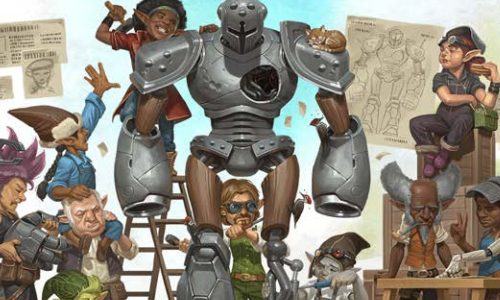
GNOME
Creature Type: Humanoid.
Age: Gnomes mature at the same rate as humans, and most are expected to settle into adult life around the age of 40. They can live to 350 years on average, but it's not too uncommon for them to reach 425-500 years of age.
Alignment: Gnomes are generally Good. Those who tend towards Law are sages, engineers, researchers, scholars, investigators, or inventors. Those who tend towards Chaos are often minstrels, tricksters, wanderers, or fanciful jewelers. Gnomes are light-hearted, and even the tricksters amongst them favor harmless pranks over vicious schemes.
Background: Gnomes are magical folk created by gods of invention, illusions, and life underground. The earliest gnomes were seldom seen by other folk due to the gnomes' secretive nature and their propensity for living in forests and burrows. What they lacked in size, they made up for in cleverness. They confounded predators with traps and labyrinthine tunnels. They also learned magic from gods like Gari Glittergold, Baervan Wildwanderer, and Baravar Cloakshadow, who visited them in disguise. That magic eventually created the lineages of forest gnomes and rock gnomes.
Gnomes are petite folk with big eyes and pointed ears, who live around 425 years. Many gnomes like the feeling of a roof over their head, even if that "roof" is nothing more than a hat.
Size: Small (about 3-4 feet tall)
Speed: 30 feet.
Special Traits
Ability Score Increase: Your Intelligence score increases by 2.
Dark Vision: You can see in dim light within 60 feet of you as if it were bright light and in darkness as if it were dim light. You can’t discern color in darkness, only shades of gray.
Gnomish Cunning: You have Advantage on Intelligence, Wisdom, and Charisma saving throws.
Gnomish Lineage: You are part of a lineage that grants you upe rnatural abilities. Choose one of the following options; whichever one you choose, Intelligence, Wisdom, or Charisma is your spellcasting ability for the spells you cast with this trait (choose the ability when you select the lineage):
Forest Gnome: You know the Minor Illusion cantrip. You also always have the Speak with Animals spell prepared. You can cast it without a spell slot a number of times equal to your Proficiency Bonus, and you regain all expended uses when you finish a Long Rest. You can also use any spell slots you have to cast the spell.
Rock Gnome: You know the Mending and Prestidigitation cantrips. In addition, you can spend 10 minutes casting Prestidigitation to create a Tiny clockwork device (AC 5, 1 HP}, such as a toy, fire starter, or music box. When you create the device, you determine its function by choosing one effect from Prestidigitation; the device produces that effect whenever you or another creature takes a Bonus Action to activate it with a touch. If the chosen effect has options within it, you choose one of those options for the device when you create it. For example, if you choose the spell's ignite-extinguish effect, you determine whether the device ignites or extinguishes fire; the device doesn't do both. You can have three such devices in existence at a time, and each falls apart 8 hours after its creation or when you dismantle it with a touch as a Utilize action.
Languages: You can read, speak, and write Common and Gnomish.
|
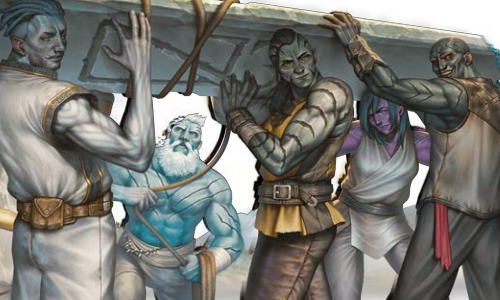
GOLIATH
Creature Type: Humanoid.
Age: Goliaths have lifespans comparable to humans. They enter adulthood in their late teens and usually live less than a century.
Alignment: Goliath society, with its clear roles and tasks, has a strong lawful bent. The goliath sense of fairness, balanced with an emphasis on self-sufficiency and personal accountability, pushes them toward neutrality.
Background: Towering over most folk, goliaths are distant descendants of giants. Each goliath bears the favors of the first giants-favors that manifest in various supernatural boons, including the ability to quickly grow and temporarily approach the height of goliaths' gigantic kin.
Goliaths have physical characteristics that are reminiscent of the giants in their family lines. For example, some goliaths look like stone giants, while others resemble fire giants. Whatever giants they count as kin, goliaths have forged their own path in the multiverse-unencumbered by the internecine conflicts that have ravaged giantkind for ages-and seek heights above those reached by their ancestors.
Size: Medium (about 7-8 feet tall)
Speed: 35 feet.
Special Traits
Ability Score Increase: When determining your character’s ability scores, increase one score by 2 and increase a different score by 1, or increase three different scores by 1. You can't raise any of your scores above 20.
Goliath Ancestry: You are descended from Giants. Choose one of the following benefits-a supernatural boon from your ancestry; you can use the chosen benefit a number of times equal to your Proficiency Bonus, and you regain all expended uses when you finish a Long Rest:
Cloud's Jaunt (Cloud Giant): As a Bonus Action, you magically teleport up to 30 feet to an unoccupied space you can see.
|
Fire's Burn (Fire Giant): When you hit a target with an attack roll and deal damage to it, you can also deal 1d10 Fire damage to that target.
|
Frost's Chill (Frost Giant): When you hit a target with an attack roll and deal damage to it, you can also deal 1d6 Cold damage to that target and reduce its Speed by 10 feet until the start of your next turn.
|
Hill's Tumble (Hill Giant): When you hit a Large or smaller creature with an attack roll and deal damage to it, you can give that target the Prone condition.
|
Stone's Endurance (Stone Giant): When you take damage, you can take a Reaction to roll 1d12. Add your Constitution modifier to the number rolled and reduce the damage by that total.
|
Storm's Thunder (Storm Giant): When you take damage from a creature within 60 feet of you, you can take a Reaction to deal ld8 Thunder damage to that creature.
|
Large Form: Starting at character level 5, you can change your size to Large as a Bonus Action if you're in a big enough space. This transformation lasts for 10 minutes or until you end it (no action required). For that duration, you have Advantage on Strength checks, and your Speed increases by 10 feet. Once you use this trait, you can't use it again until you finish a Long Rest.
Powerful Build: You have Advantage on any saving throw you make to end the Grappled condition. You also count as one size larger when determining your carrying capacity.
Languages: Your character can speak, read, and write Common and one other language that you and your DM agree is appropriate for the character. The Player’s Handbook offers a list of languages to choose from. The DM is free to modify that list for a campaign.
|
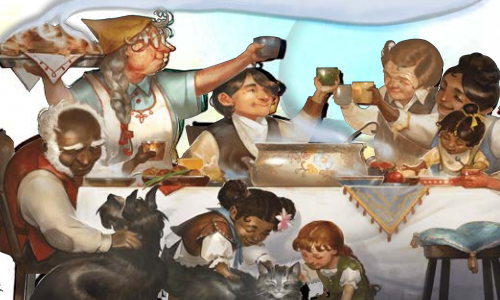
HALFLING
Creature Type: Humanoid.
Age: A halfling reaches adulthood at the age of 20 and generally lives to 150 years of age.
Alignment: Most halflings are lawful good. As a rule, they are good-hearted and kind, hate to see others in pain, and have no tolerance for oppression. They are also very orderly and traditional, leaning heavily on the support of their community and the comfort of the old ways.
Background: Cherished and guided by gods who value life, home, and hearth, halflings gravitate toward bucolic havens where family and community help shape their lives. That said, many halflings possess a brave and adventurous spirit that leads them on journeys of discovery, affording them the chance to explore a bigger world and make new friends along the way.
Their size- similar to that of a human child-helps them pass through crowds unnoticed and slip through tight spaces.
Anyone who has spent time around halflings, particularly halfling adventurers, has likely witnessed the storied "luck of the halflings" in action. When a halfling is in mortal danger, an unseen force seems to intervene on the halfling's behalf. Many halflings believe in the power of luck, and they attribute their unusual gift to one or more of their benevolent gods, including Yondalla, Brandobaris, and Charmalaine. The same gift might contribute to their robust life spans (about 150 years).
Halfling communities come in all varieties. For every sequestered shire tucked away in an unspoiled
part of the world, there's a crime syndicate like the Boromar Clan in the Eberron setting or a territorial mob of halflings like those in the Dark Sun setting.
Halflings who prefer to live underground are sometimes called strongheart halflings or stouts. Nomadic halflings, as well as those who live among humans and other tall folk, are sometimes called lightfoot halflings or tallfellows.
Size: Small (about 2-3 feet tall)
Speed: 30 feet.
Special Traits
Ability Score Increase: Your Dexterity score increases by 2.
Brave: You have Advantage on saving throws you make to avoid or end the Frightened condition.
Halfling Nimbleness: You can move through the space of any creature that is a size larger than you, but you can't stop in the same space.
Luck: When you roll a 1 on the d2O of a D2O Test, you can reroll the die, and you must use the new roll.
Naturally Stealthy: You can take the Hide action even when you are obscured only by a creature that is at least one size larger than you.
Languages: You can speak, read, and write Common and Halfling.
|

HUMAN
Creature Type: Humanoid.
Age: Humans reach adulthood in their late teens and live less than a century.
Alignment: Humans tend toward no particular alignment. The best and the worst are found among them.
Background: Found throughout the multiverse, humans are as varied as they are numerous, and they endeavor to achieve as much as they can in the years they are given. Their ambition and resourcefulness are commended, respected, and feared on many worlds.
Humans are as diverse in appearance as the people of Earth, and they have many gods. Scholars dispute the origin of humanity, but one of the earliest known human gatherings is said to have occurred in Sigil, the torus-shaped city at the center of the multi verse and the place where the Common language was born. From there, humans could have spread to every part of the multiverse, bringing the City of Doors' cosmopolitanism with them.
Size: Medium (about 4-7 feet tall) or Small (about 2-4 feet tall), chosen when you select this species.
Speed: 30 feet.
Special Traits
Ability Score Increase: Your ability scores each increase by 1.
Resourceful: You gain Heroic Inspiration whenever you finish a Long Rest.
Skillful: You gain proficiency in one skill of your choice.
Versatile: You gain an Origin feat of your choice (see chapter S). Skilled is recommended.
Languages: You can speak, read, and write Common and one extra language of your choice. Humans typically learn the languages of other peoples they deal with, including obscure dialects. They are fond of sprinkling their speech with words borrowed from other tongues: Orc curses, Elvish musical expressions, Dwarvish military phrases, and so on.
|
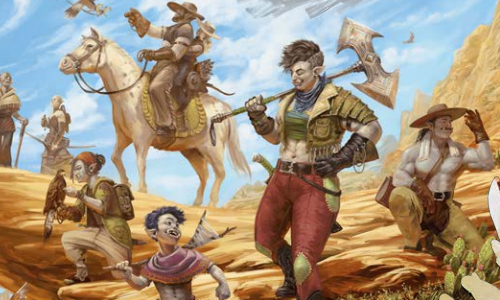
ORC
Creature Type: Humanoid.
Age: Orcs reach adulthood at age 16 and live up to 80 years.
Alignment: The orcs are a passionate people, given to powerful emotion and deep faith. They are generally chaotic, but can be any alignment.
Background: Orcs trace their creation to Gruumsh, a powerful god who roamed the wide open spaces of the Material Plane. Gruumsh equipped his children with gifts to help them wander great plains, vast caverns, and churning seas and to face the monsters that lurk there. Even when they turn their devotion to other gods, orcs retain Gruumsh's gifts: endurance, determination, and the ability to see in darkness.
Orcs are, on average, tall and broad. They have gray or green skin, ears that are sharply pointed, and prominent lower canines that resemble small tusks. Orc youths on some worlds are told about their ancestors' great travels and travails. Inspired by those tales, many of those ores wonder when Gruumsh will call on them to match the heroic deeds of old and if they will prove worthy of his favor. Other orcs are happy to leave old tales in the past and find their own way.
Size: Medium (about 6-7 feet tall)
Speed: 30 feet.
Special Traits
Ability Score Increase: When determining your character’s ability scores, increase one score by 2 and increase a different score by 1, or increase three different scores by 1. You can't raise any of your scores above 20.
Adrenaline Rush: You can take the Dash action as a Bonus Action. When you do so, you gain a number of Temporary Hit Points equal to your Proficiency Bonus.
You can use this trait a number of times equal to your Proficiency Bonus, and you regain all expended uses when you finish a Short or Long Rest.
Dark Vision: You can see in dim light within 120 feet of you as if it were bright light and in darkness as if it were dim light. You can’t discern color in darkness, only shades of gray.
Relentless Endurance: When you are reduced to 0 Hit Points but not killed outright, you can drop to 1 Hit Point instead. Once you use this trait, you can't do so again until you finish a Long Rest.
Languages:
|
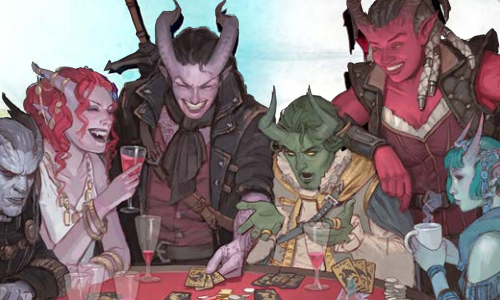
TIEFLING
Creature Type: Humanoid.
Age: Tieflings mature at the same rate as humans but live a few years longer.
Alignment: Tieflings might not have an innate tendency toward evil, but many of them end up there. Evil or not, an independent nature inclines many tieflings toward a chaotic alignment.
Background: Tieflings are either born in the Lower Planes or have fiendish ancestors who originated there. A tiefling (pronounced TEE-fling) is linked by blood to a devil, a demon, or some other Fiend. This connection to the Lower Planes is the tiefling's fiendish legacy, which comes with the promise of power yet has no effect on the tiefling's moral outlook. A tiefling chooses whether to embrace or lament their fiendish legacy. The three legacies are described below.
Abyssal: The entropy of the Abyss, the chaos of Pandemonium, and the despair of Carceri call to tieflings who have the abyssal legacy. Horns, fur, tusks, and peculiar scents are common physical features of such tieflings, most of whom have the blood of demons coursing through their veins.
Chthonic: Tieflings who have the chthonic legacy feel not only the tug of Carceri but also the greed of Gehenna and the gloom of Hades. Some of these tieflings look cadaverous. Others possess the unearthly beauty of a succubus, or they have physical features in common with a night hag, a yugoloth, or some other Neutral Evil fiendish ancestor.
Infernal: The infernal legacy connects tieflings not only to Gehenna but also the Nine Hells and the raging battlefields of Acheron. Horns, spioes, tails, golden eyes, and a fa int odor of sulfur or smoke are common physical featu res of such tieflings, most of whom trace their ancestry to devils
Size: Medium (about 4-7 feet tall) or Small (about 3-4 feet tall), chosen when you select this species.
Speed: 30 feet.
Special Traits
Ability Score Increase: Your Charisma score increases by 2.
Dark Vision: You can see in dim light within 60 feet of you as if it were bright light and in darkness as if it were dim light. You can’t discern color in darkness, only shades of gray.
Fiendish Legacy:
:
:
Languages: You can speak, read, and write Common and Infernal.
|
EXOTIC RACES |
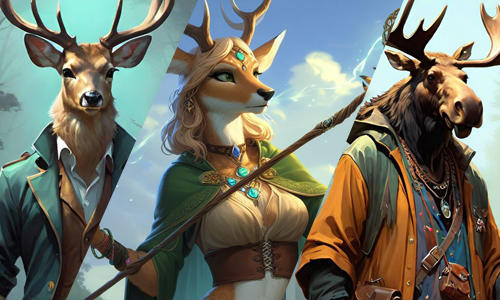
CERVAN (DEERFOLK)
Creature Type:
Age:
Alignment: Cervans are pragmatic in their thinking, and generally prefer to keep their philosophies flexible in order to prioritize what they believe is important for both themselves and their communities. They lean towards neutral alignments.
Size: Medium.
---Grove Cervans stand between 5 and 6 feet tall, and have light builds, weighing between 130 and 180 pounds.
---Pronghorn Cervans are taller and tend toward heavier, more muscular builds, standing around 7 feet tall, and sometimes weighing over 200 pounds.
Speed: 30 feet.
Special Traits
Ability Score Increase: Your Constitution score increases by 2.
Practical: Cervans are eminently practical and like to spend their time learning useful skills for life in their woodland villages. You gain proficiency in one of the following skills: Athletics, Medicine, Nature, or Survival.
Surge of Vigor: All cervans possess a great tenacity and will to survive, which allows them to bounce back from even the most devastating blows. If an attack deals over half of your current remaining hit points in damage, (even if your hit points are reduced to 0 by the attack) you immediately regain hit points equal to 1d12 + your Constitution Modifier.
You can’t use this feature again until you have completed a long rest.
Languages: You can speak, read, and write Common, and speak Cervan (Cervan has no written component).
GROVE CERVAN: As a grove cervan, you are swift and agile, able to quickly maneuver out of harm’s way. You are also incredibly versatile, and can fulfill a variety of roles within a village or an adventuring party.
Ability Score Increase: Your Dexterity score increases by 1.
Swift: Your base walking speed increases to 35 feet.
Standing Leap: Your base long jump is 30 feet, and your base high jump is 15 feet, with or without a running start.
Nimble Step: Opportunity attacks made against you are rolled with disadvantage.
PRONGHORN CERVAN: As a pronghorn cervan, you were born larger and stronger than others in the community and found yourself laden with expectations from a very young age. It is up to you whether you embrace your position of privilege, or rebel against the constraints thrust upon you by cervan society.
Ability Score Increase: Your Strength score increases by 1.
Robust Build: Your carrying capacity is doubled, as is the weight you can push, drag, or lift.
Antlers: You have a set of large, strong antlers that can be used to make devastating charge attacks. You can use your unarmed strike to gore opponents, dealing 1d6 + your Strength Modifier piercing damage on a hit.
Additionally, if you move at least 20 feet in a straight line towards an opponent, you can spend a bonus action to charge them, dealing an extra 1d6 points of piercing damage. If the target of your charge is Large or smaller, they must make a Strength saving throw against a DC of your Proficiency Bonus + 8 + your Strength Modifier. On failure, the target is pushed 10 feet away from you into a space of your choice.
|
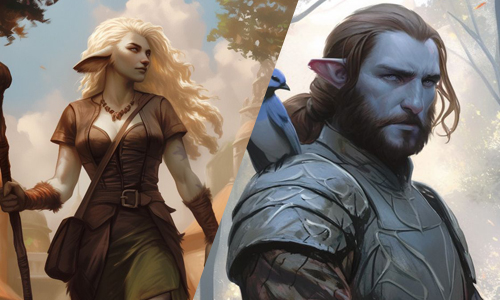
FIRBOLG
Creature Type: Humanoid.
Age: As humanoids related to the fey, firbolg have long lifespans. A firbolg reaches adulthood around 30, and the oldest of them can live for 500 years
Alignment: As people who follow the rhythm of nature and see themselves as its caretakers, firbolg are typically neutral good. Evil firbolg are rare and are usually the sworn enemies of the rest of their kind.
Size: Medium. Firbolg are between 7 and 8 feet tall and weigh between 240 and 300 pounds. Your size is Medium.
Speed: 30 feet.
Special Traits
Ability Score Increase: When determining your character’s ability scores, increase one score by 2 and increase a different score by 1, or increase three different scores by 1. You can't raise any of your scores above 20.
Firbolg Magic: You can cast the Detect Magic and Disguise Self spells with this trait. When you use this version of Disguise Self, you can seem up to 3 feet shorter or taller. Once you cast either of these spells with this trait, you can’t cast that spell with it again until you finish a long rest. You can also cast these spells using any spell slots you have.
---Intelligence, Wisdom, or Charisma is your spellcasting ability for these spells when you cast them with this trait (choose when you select this race).
Hidden Step: As a bonus action, you can magically turn invisible until the start of your next turn or until you attack, make a damage roll, or force someone to make a saving throw. You can use this trait a number of times equal to your proficiency bonus, and you regain all expended uses when you finish a long rest.
Powerful Build: You count as one size larger when determining your carrying capacity and the weight you can push, drag, or lift.
Speech of Beast and Leaf: You have the ability to communicate in a limited manner with Beasts, Plants, and vegetation. They can understand the meaning of your words, though you have no special ability to understand them in return. You have advantage on all Charisma checks you make to influence them.
Languages: Your character can speak, read, and write Common and one other language that you and your DM agree is appropriate for the character.
|
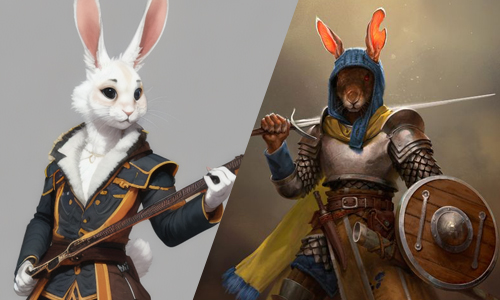
HARENGON (RABBITFOLK)
Creature Type: Humanoid.
Age: Harengon have an average lifespan of about a century. They are considered adults around the age of 16 or 17. Their overall lifespan is roughly equivalent to a human's.
Alignment: Harengon may be any alignment but tend to gravitate toward lawful and neutral alignments. Harengons are rarely chaotic.
Size: You are Medium or Small. You choose the size when you select this race. Adult Harengons stand between 4-5 feet tall and weigh between 60-120 pounds.
Speed: 30 feet.
Special Traits
Ability Score Increase: When determining your character’s ability scores, increase one score by 2 and increase a different score by 1, or increase three different scores by 1. You can't raise any of your scores above 20.
Hare Trigger: You can add your proficiency bonus to your initiative rolls.
Leporine Senses: You have proficiency in the Perception skill.
Lucky Footwork: When you fail a Dexterity saving throw, you can use your reaction to roll a d4 and add it to the save, potentially turning the failure into a success. You can't use this reaction if you're prone or your speed is 0.
Rabbit Hop: As a bonus action, you can jump a number of feet equal to five times your proficiency bonus, without provoking opportunity attacks. You can use this trait only if your speed is greater than 0. You can use it a number of times equal to your proficiency bonus, and you regain all expended uses when you finish a long rest.
Languages: Your character can speak, read, and write Common and one other language that you and your DM agree is appropriate for the character.
|
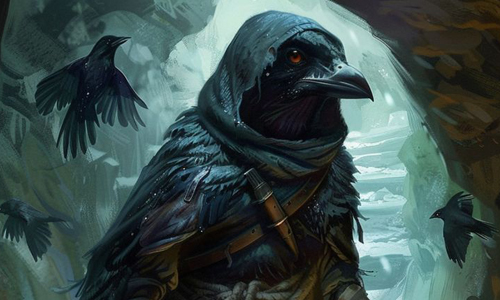
KENKU
Creature Type: Humanoid.
Age: Kenku have shorter lifespans than humans. They reach maturity at about 12 years old and can live to 60.
Alignment: Kenku are chaotic creatures, rarely making enduring commitments, and they care mostly for preserving their own hides. They are generally chaotic neutral in outlook.
Size: Small or Medium. You choose the size when you select this race. Kenku are around 5 feet tall and weigh between 90 and 120 pounds.
Speed: 30 feet.
Special Traits
Ability Score Increase: When determining your character’s ability scores, increase one score by 2 and increase a different score by 1, or increase three different scores by 1. You can't raise any of your scores above 20.
Expert Duplication: When you copy writing or craftwork produced by yourself or someone else, you have advantage on any ability checks you make to produce an exact duplicate.
Kenku Recall: Thanks to your supernaturally good memory, you have proficiency in two skills of your choice.
---Moreover, when you make an ability check using any skill in which you have proficiency, you can give yourself advantage on the check before rolling the d20. You can give yourself advantage in this way a number of times equal to your proficiency bonus, and you regain all expended uses when you finish a long rest.
Mimicry: You can accurately mimic sounds you have heard, including voices. A creature that hears the sounds you make can tell they are imitations only with a successful Wisdom (Insight) check against a DC of 8 + your proficiency bonus + your Charisma modifier.
Languages: Your character can speak, read, and write Common and one other language that you and your DM agree is appropriate for the character.
|
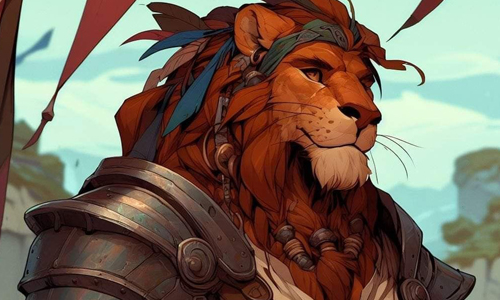
LEONIN (LIONFOLK)
Creature Type: Humanoid.
Age: Leonin mature and age at about the same rate as humans.
Alignment: Leonin tend toward good alignments. Leonin who are focused on the pride lean toward lawful good.
Size: Medium. Leonin are typically over 6 feet tall, with some standing over 7 feet.
Speed: 35 feet.
Special Traits
Ability Score Increase: Your Constitution score increases by 2, and your Strength score increases by 1.
Darkvision: You can see in dim light within 60 feet of you as if it were bright light and in darkness as if it were dim light. You can’t discern color in darkness, only shades of gray.
Claws: Your claws are natural weapons, which you can use to make unarmed strikes. If you hit with them, you can deal slashing damage equal to 1d4 + your Strength modifier.
Hunter's Instincts: You have proficiency in one of the following skills of your choice: Athletics, Intimidation, Perception, or Survival.
Daunting Roar: As a bonus action, you can let out an especially menacing roar. Creatures of your choice within 10 feet of you that can hear you must succeed on a Wisdom saving throw or become frightened of you until the end of your next turn. The DC of the save equals 8 + your proficiency bonus + your Constitution modifier. Once you use this trait, you can't use it again until you finish a short or long rest.
Languages: You can speak, read, and write Common and Leonin.
|
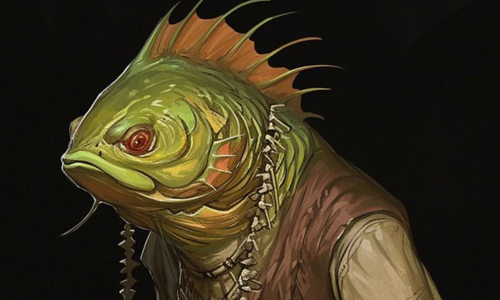
LOCATHAH (FISHFOLK)
Creature Type: Humanoid with the Aquatic subtype.
Age: Locathah mature to adulthood by the age of 10 but have been known to live up to 80 years.
Alignment: Most locathah are true neutral or have some aspect of neutrality in their alignment. They tend toward good, coming from a culture where compassion for the downtrodden is a commonality.
Size: Medium. Locathah stand between 5 and 6 feet tall and average about 150 pounds.
Speed: Your base walking speed is 30 feet, and you have a swim speed of 30 feet.
Special Traits
Ability Score Increase: Your Strength score increases by 2 and your Dexterity score increases by 1.
Natural Armor: You have tough, scaly skin. When you aren’t wearing armor, your AC is 12 + your Dexterity modifier. You can use your natural armor to determine your AC if the armor you wear would leave you with a lower AC. A shield’s benefits apply as normal while you use your natural armor.
Observant and Athletic: You have proficiency in the Athletics and Perception skills.
Leviathan Will: You have advantage on saving throws against being charmed, frightened, paralyzed, poisoned, stunned, or put to sleep.
Limited Amphibiousness: You can breathe air and water, but you need to be submerged at least once every 4 hours to avoid suffocating.
Languages: You can speak, read, and write Aquan and Common.
|
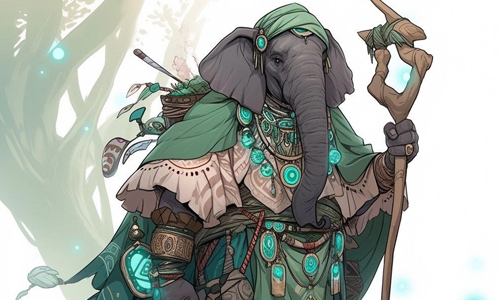
LOXODON (ELEPHANTFOLK)
Creature Type: Humanoid.
Age: Loxodons mature at the same rate as humans, however, they are considered mature by their people at 60 years old. Their lifespan can be as long as 450 years.
Alignment: Most Loxodons are lawful. They also tend to be good.
Size: Medium. Loxodons are between 7 and 8 feet (≈2.5 meters) tall and weigh between 300(130kg) and 400 pounds(181kg).
Speed: 30 feet.
Special Traits
Ability Score Increase: Your Constitution score increases by 2, and your Wisdom score increases by 1.
Powerful Build: You count as one size larger when determining your carrying capacity and the weight you can push, drag, or lift.
Loxodon Serenity: You have advantage against being charmed or frightened.
Natural Armor: You have thick, leathery skin. When you aren't wearing armor, your AC is 12 + your Constitution modifier. You can use your natural armor to determine your AC if the armor you wear would leave you with a lower AC. A shield's benefits apply as normal while you use your natural armor.
Trunk: You can grasp things with your trunk, and you can use it as a snorkel. It has a reach of 5 feet, and it can lift a number of pounds equal to five times your Strength score. You can use it to do the following simple tasks: lift, drop, hold, push, or pull an object or a creature; open or close a door or a container; grapple someone; or make an unarmed strike. Your DM might allow other simple tasks to be added to that list of options. It can't wield weapons or shields or do anything that requires manual precision, such as using tools or magic items or performing the somatic components of a spell.
Keen Smell: Thanks to your sensitive trunk, you have advantage on Wisdom (Perception), Wisdom (Survival), and Intelligence (Investigation) checks that involve smell.
Languages: You can speak, read, and write Common and Loxodon.
|
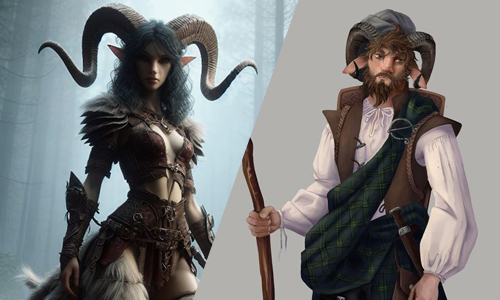
SATYR
Creature Type: Fey.
Age: Satyrs mature and age at about the same rate as humans.
Alignment: Satyrs delight in living a life free of the mantle of law. They gravitate toward being good, but some have devious streaks and enjoy causing dismay.
Size: Medium. Satyrs range from just under 5 feet to about 6 feet in height, with generally slender builds.
Speed: 35 feet.
Special Traits
Ability Score Increase: When determining your character’s ability scores, increase one score by 2 and increase a different score by 1, or increase three different scores by 1. You can't raise any of your scores above 20.
Ram: You can use your head and horns to make unarmed strikes. When you hit with them, the strike deals 1d6 + your Strength modifier bludgeoning damage, instead of the bludgeoning damage normal for an unarmed strike.
Magic Resistance: You have advantage on saving throws against spells.
Mirthful Leaps: Whenever you make a long jump or a high jump, you can roll a d8 and add the number rolled to the number of feet you cover, even when making a standing jump. This extra distance costs movement as normal.
Reveler: As an embodiment of revelry, you have proficiency in the Performance and Persuasion skills, and you have proficiency with one musical instrument of your choice.
Languages: Your character can speak, read, and write Common and one other language that you and your DM agree is appropriate for the character
|

SVIRFNEBLIN (DEEP GNOME)
Creature Type: You are a Humanoid. You are also considered a gnome for any prerequisite or effect that requires you to be a gnome.
Age: Gnomes mature at the same rate as humans, and most are expected to settle into adult life around the age of 40. They can live to 350 years on average, but it's not too uncommon for them to reach 500 years of age.
Alignment: Svirfneblin (Deep Gnome) are generally neutral.
Size: Small. Gnomes are between 3 and 4 feet tall and weigh around 40 pounds.
Speed: 30 feet.
Special Traits
Ability Score Increase: When determining your character’s ability scores, increase one score by 2 and increase a different score by 1, or increase three different scores by 1. You can't raise any of your scores above 20.
Darkvision: You can see in dim light within 120 feet of you as if it were bright light and in darkness as if it were dim light. You discern colors in that darkness only as shades of gray.
Gift of the Svirfneblin: Starting at 3rd level, you can cast the Disguise Self spell with this trait. Starting at 5th level, you can also cast the Nondetection spell with it, without requiring a material component. Once you cast either of these spells with this trait, you can’t cast that spell with it again until you finish a long rest. You can also cast these spells using spell slots you have of the appropriate level.
---Intelligence, Wisdom, or Charisma is your spellcasting ability for these spells when you cast them with this trait (choose when you select this race).
Gnomish Magic Resistance: You have advantage on Intelligence, Wisdom, and Charisma saving throws against spells.
Svirfneblin Camoflauge: When you make a Dexterity (Stealth) check, you can make the check with advantage. You can use this trait a number of times equal to your proficiency bonus, and you regain all expended uses when you finish a long rest.
Languages: Your character can speak, read, and write Common and one other language that you and your DM agree is appropriate for the character.
|
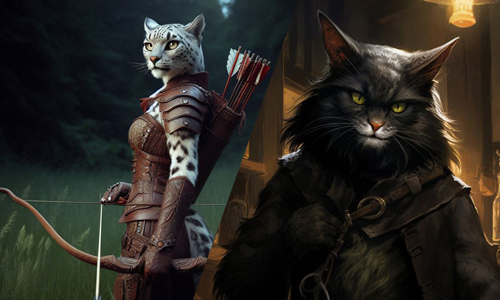
TABAXI
Creature Type: Humanoid.
Age: Tabaxi have lifespans equivalent to humans.
Alignment: Tabaxi tend toward chaotic alignments, as they let impulse and fancy guide their decisions. They are rarely evil, with most of them driven by curiosity rather than greed or other dark impulses.
Size: You are Medium or Small. You choose the size when you select this race
Speed: Your walking speed is 30 feet, and you have a climbing speed equal to your walking speed.
Special Traits
Ability Score Increase: When determining your character’s ability scores, increase one score by 2 and increase a different score by 1, or increase three different scores by 1. You can't raise any of your scores above 20.
Cat's Claws: You can use your claws to make unarmed strikes. When you hit with them, the strike deals 1d6 + your Strength modifier slashing damage, instead of the bludgeoning damage normal for an unarmed strike.
Cat's Talent: You have proficiency in the Perception and Stealth skills.
Darkvision: You can see in dim light within 60 feet of you as if it were bright light, and in darkness as if it were dim light. You discern colors in that darkness only as shades of gray.
Feline Agility: Your reflexes and agility allow you to move with a burst of speed. When you move on your turn in combat, you can double your speed until the end of the turn. Once you use this trait, you can’t use it again until you move 0 feet on one of your turns.
Languages: Your character can speak, read, and write Common and one other language that you and your DM agree is appropriate for the character.
|
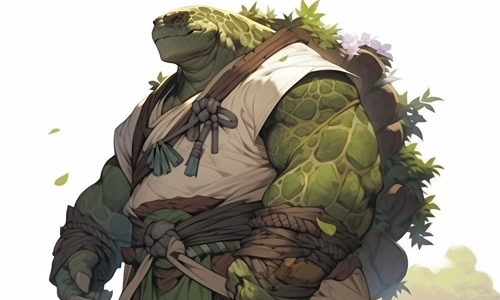
TORTLE
Creature Type: Humanoid.
Age: Young tortles crawl for a few weeks after birth before learning to walk on two legs. They reach adulthood by the age of 15 and live an average of 50 years.
Alignment: Tortles tend to lead orderly, ritualistic lives. They develop customs and routines, becoming more set in their ways as they age. Most are lawful good. A few can be selfish and greedy, tending more toward evil, but it's unusual for a tortle to shuck off order in favor of chaos.
Size: You are Medium or Small. You choose the size when you select this race. Tortle adults stand 5 to 6 feet tall and average 450 pounds. Their shells account for roughly one-third of their weight.
Speed: 30 feet.
Special Traits
Ability Score Increase: When determining your character’s ability scores, increase one score by 2 and increase a different score by 1, or increase three different scores by 1. You can't raise any of your scores above 20.
Claws: You have claws that you can use to make unarmed strikes. When you hit with them, the strike deals 1d6 + your Strength modifier slashing damage, instead of the bludgeoning damage normal for an unarmed strike.
Hold Breath: You can hold your breath for up to 1 hour.
Natural Armor: Your shell provides you a base AC of 17 (your Dexterity modifier doesn’t affect this number). You can’t wear light, medium, or heavy armor, but if you are using a shield, you can apply the shield’s bonus as normal.
Nature's Intuition: Thanks to your mystical connection to nature, you gain proficiency with one of the following skills of your choice: Animal Handling, Medicine, Nature, Perception, Stealth, or Survival.
Shell Defense: You can withdraw into your shell as an action. Until you emerge, you gain a +4 bonus to your AC, and you have advantage on Strength and Constitution saving throws. While in your shell, you are prone, your speed is 0 and can’t increase, you have disadvantage on Dexterity saving throws, you can’t take reactions, and the only action you can take is a bonus action to emerge from your shell.
Languages: Your character can speak, read, and write Common and one other language that you and your DM agree is appropriate for the character.
|

WARFORGED
Creature Type: Humanoid.
Age: A typical warforged is between two and thirty years old. The maximum lifespan of the warforged remains a mystery; so far, warforged have shown no signs of deterioration due to age.
Alignment: Most warforged take comfort in order and discipline, tending toward law and neutrality. But some have absorbed the morality, or lack thereof, of the beings with which they served.
Size: Your size is Medium. To set your height and weight randomly, start with rolling a size modifier.
---Size modifier = 2d6
---Height = 5 feet + 10 inches + your size modifier in inches
---Weight in pounds = 270 + (4 x your size modifier)
Speed: 30 feet.
Special Traits
Ability Score Increase: Your Constitution score increases by 2, and one other ability score of your choice increases by 1.
Constructed Reslience: You were created to have remarkable fortitude, represented by the following benefits:
---You have advantage on saving throws against being poisoned, and you have resistance to poison damage.
---You don't need to eat, drink, or breathe.
---You are immune to disease.
---You don't need to sleep, and magic can't put you to sleep.
Sentry's Rest: When you take a long rest, you must spend at least six hours in an inactive, motionless state, rather than sleeping. In this state, you appear inert, but it doesn't render you unconscious, and you can see and hear as normal.
Integrated Protection: Your body has built-in defensive layers, which can be enhanced with armor.
---You gain a +1 bonus to Armor Class.
---You can don only armor with which you have proficiency. To don armor, you must incorporate it into your body over the course of 1 hour, during which you must remain in contact with the armor. To doff armor, you must spend 1 hour removing it. You can rest while donning or doffing armor in this way.
---While you live, your armor can't be removed from your body against your will.
Specialized Design:
Languages: You can speak, read, and write Common and one other language of your choice.
|
| MONSTEROUS RACES |
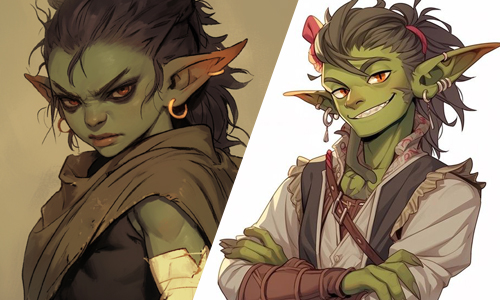
GOBLIN
Creature Type: Humanoid. You are also considered a goblinoid for any prerequisite or effect that requires you to be a goblinoid.
Age: Goblins reach adulthood at age 8 and live up to 60 years.
Alignment: Goblins are typically neutral evil, as they care only for their own needs. A few goblins might tend toward good or neutrality, but only rarely.
Size: Small (3-4 feet tall, between 40-80lbs)
Speed: 30 feet
Special Traits
Ability Score Increase One ability score of your choice increases by 2, and one other ability score of your choice increases by 1, or three ability scores of your choice increase by 1.
Darkvision You can see in dim light within 60 feet of you as if it were bright light, and in darkness as if it were dim light. You can't discern color in darkness, only shades of gray.
Fury of the Small When you damage a creature with an attack or a spell and the creature's size is larger than yours, you can cause the attack or spell to deal extra damage to the creature. The extra damage equals your level. Once you use this trait, you can't use it again until you finish a short or long rest.
Nimble Escape You can take the Disengage or Hide action as a bonus action on each of your turns.
Languages You can speak, read, and write Common and Goblin.
|
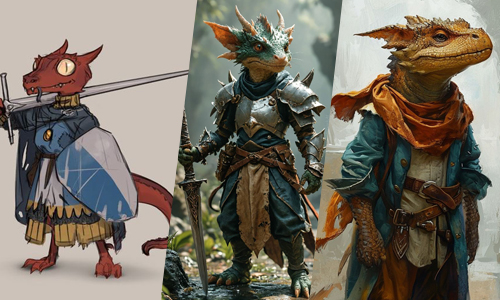
KOBOLD
Creature Type: Humanoid.
Age: Kobolds reach adulthood at age 6 and can live up to 120 years but rarely do so.
Alignment: Kobolds are fundamentally selfish, making them evil, but their reliance on the strength of their group makes them trend toward law.
Size: Small (Kobolds are between 2 and 3 feet tall and weigh between 25 and 35 pounds. Your size is Small. Your height is 2'1" with a modifier of +2d4. Your weight is 25 lbs. with a modifier of +(height roll) x 1)
Speed: 30 feet
Special Traits
Ability Score Increase: One ability score of your choice increases by 2, and one other ability score of your choice increases by 1, or three ability scores of your choice increase by 1.
Darkvision: You can see in dim light within 60 feet of you as if it were bright light, and in darkness as if it were dim light. You discern colors in that darkness only as shades of gray.
Draconic Cry: As a bonus action, you let out a cry at your enemies within 10 feet of you. Until the start of your next turn, you and your allies have advantage on attack rolls against any of those enemies who could hear you. You can use this trait a number of times equal to your proficiency bonus, and you regain all expended uses when you finish a long rest.
Kobold Legacy: Kobolds’ connection to dragons can manifest in unpredictable ways in an individual kobold. Choose one of the following legacy options for your kobold.
---Craftiness: You have proficiency in one of the following skills of your choice: Arcana, Investigation, Medicine, Sleight of Hand, or Survival.
---Defiance: You have advantage on saving throws to avoid or end the frightened condition on yourself.
---Draconic Sorcery: You know one cantrip of your choice from the sorcerer spell list. Intelligence, Wisdom, or Charisma is your spellcasting ability for that cantrip (choose when you select this race).
Languages: You can speak, read, and write Common and one other language that you and your DM agree is appropriate for your character.
|

LIZARDFOLK
Creature Type: Humanoid.
Age: Lizardfolk reach maturity around age 14 and rarely live longer than 60 years.
Alignment: Most lizardfolk are neutral. They see the world as a place of predators and prey, where life and death are natural processes. They wish only to survive, and prefer to leave other creatures to their own devices.
Size: Medium. Lizardfolk are a little bulkier and taller than humans, and their colorful frills make them appear even larger.
Speed: Your walking speed is 30 feet, and you have a swimming speed equal to your walking speed.
Special Traits
Ability Score Increase: When determining your character’s ability scores, increase one score by 2 and increase a different score by 1, or increase three different scores by 1. You can't raise any of your scores above 20.
Bite: You have a fanged maw that you can use to make unarmed strikes. When you hit with it, the strike deals 1d6 + your Strength modifier slashing damage, instead of the bludgeoning damage normal for an unarmed strike.
Hold Breath: You can hold your breath for up to 15 minutes at a time.
Hungry Jaws: You can throw yourself into a feeding frenzy. As a bonus action, you can make a special attack with your Bite. If the attack hits, it deals its normal damage, and you gain temporary hit points equal to your proficiency bonus. You can use this trait a number of times equal to your proficiency bonus, and you regain all expended uses when you finish a long rest.
Natural Armor: You have tough, scaly skin. When you aren’t wearing armor, your base AC is 13 + your Dexterity modifier. You can use your natural armor to determine your AC if the armor you wear would leave you with a lower AC. A shield’s benefits apply as normal while you use your natural armor.
Nature's Intuition: Thanks to your mystical connection to nature, you gain proficiency with two of the following skills of your choice: Animal Handling, Medicine, Nature, Perception, Stealth, or Survival.
Languages: Your character can speak, read, and write Common and one other language that you and your DM agree is appropriate for the character.
|
| HOMEBREW RACES |
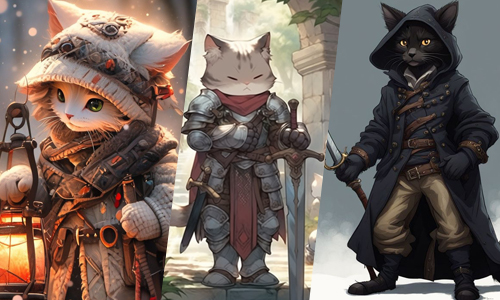
FELIS
Creature Type: Humanoid.
Age: Felis are considered full adults when they reach the age of 10. Felis can live up to 135 years of age.
Alignment: The majority of Felis are chaotic neutral and lean towards being adventurers or quest seekers. A Felis will always inspect interesting and seek out the unknown.
Size: Small. Felis average between 2-3 feet tall and weigh up to 30 pounds.
Speed: 25 feet.
Claws: Due to your claws you have a climb speed of 15 feet. You can also use your claws as a weapon. When you land an attack you deal 1d4 + Strength Modifier as slashing damaged as an unarmed attack.
Quadrupedal Lineage: Due to your origins, when you drop to all fours, you increase your movement speed by 10, but you must not be wielding anything or wearing heavy armor to gain this benefit.
Special Traits
Ability Score Increase: Your Charisma score increases by 2.
Darkvision: Being a Felis you are able to see in the dark up to 60 feet as if it were bright light, and darkness beyond that as dim light. You discern colors in that darkness only as shades of gray.
Purr-suasive: Felis use their short and cute nature to their advantage as much as they can. Once per long rest roll with Advantage on one Persuasion attempt on a friendly creature.
Keen eyes: Due to your feline lineage, you have very keen eyesight! you gain proficiency in the Perception skill.
Curious Nature: Being an inquisitive Felis you have proficiency in the Investigation skill.
Languages: You can speak, read, and write Common and choose one other language.
FERAL VARIANT FELIS TRAITS
The following replaces the Felis ability score trait.
Ability Score Increase: Dexterity increases by 2.
-You now the Primal Savagery cantrip.
-At 3rd level you learn the Speak with Animals spell.
-At 5th level you learn Find Familiar spell.
Each cantrip and spell can only be used once per long rest.
MAINE COON VARIANT FELIS TRAITS
The following replaces the Felis ability score trait, size, speed, purr-suasive, curious nature.
Ability Score Increase: Strength increases by 2.
Size: Small. Larger than the average Felis, you are 3-4 feet tall and weigh 100 pounds.
Speed: 30 feet.
Purr-suasive: Replace Purr-suasive with Intimidation.
Curious Nature: There's one you are curious about, how strong you can get! Replaced with Glorious Strength once per long rest you gan advantage on a strength check or saving throw.
FELINE LINEAGES:
Some clans boast of their pureblood lineage, but others are mixed. Choose one of the following lineages to determine what Felis Favor you gain at birth.
Common Bond: Tabby Felis are among the most common of all the lineages. As such they know more about common social spheres. You increase your Wisdom score by 1.
Noble Leadership: With fur pure as the whitest snow, those Felis born without color are often seen as the noblest of the Felis. When of age they take up leadership roles in their clans. Once per long rest you can instill allies with a sense of vigor. Those within a 15 foot range gain temporary Hit Points equal to your Charisma modifier for 8 hours.
Fiery Nature: Hot tempered and quick to lash out with claws these ginger furred Felis are fuious in the field of battle. Increase your Strength score by 1.
Hunters Sense: Masters of tracking, those with brown fur are destined to hunt. You gain proficiency in the Survival skill.
Good Fortune: Calico fur is the rarest of all Felis lineages. The legends say that all of the black furred Felis' luck went to the calico. Once per day when you roll an attack roll, ability check, or saving throw you can choose to reroll. You must accept the results of the reroll.
Arcane Adept: Starry-eyed and the fur of a blue-night sky it is said that these Felis are connected to the Astral Sea. Increase your Intelligence score by 1.
Night Stalker: Grey is the perfect color to blend into ones surroundings. Felis with grey fur are able to hide very easily. You gain proficiency in the Stealth skill.
Unlucky: Typically those born of this lineage are pf pure black fur and carry a natural unluckiness wherever they go. Once per long rest as a reaction you may cast your bad luck onto an enemy, forcing them to roll with disadvantage on one attack or ability saving throw.
Mutation: Born of a gene mutation these Felis have no fur or fur so small it appears to be bald. To stay warm these Felis are constantly on the move. You gain proficiency in acrobatics.
|
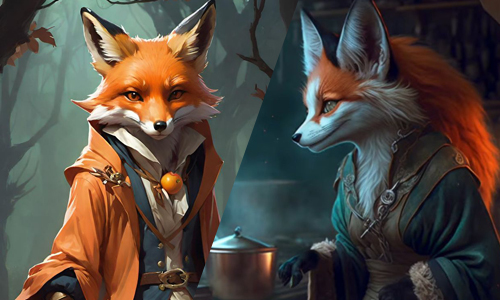
FOXFOLK
Creature Type: Humanoid.
Age: Foxfolk reach maturity at around 13 years old and have similar lifespans to humans.
Alignment: Due to their sly nature, Foxfolk tend to lean toward more chaotic alignments.
Size: Medium. Foxfolk are tall and slender typically being around 5-6 feet and never smaller than 5. They tend to be between 140 and 275 pounds.
Speed: 35 feet.
Special Traits
Ability Score Increase: Your Dexterity score increases by 2 and your Charisma score increases by 1.
Darkvision: You can see in dim light within 60 feet of you as if it were bright light, and in darkness as if it were dim light. You can't discern color in darkness, only shades of gray.
Sly Nature: You are proficient in Sleight of Hand (Dexterity) and Persuasion (Charisma) checks.
Claws: You are proficient with your unarmed strikes, which deal 1d6 slashing damage on a hit.
Natural Trickster: You have advantage on saving throws against being charmed.
Feline Agility: Your reflexes and agility allow you to move with a burst of speed. When you move on your tum in combat, you can double your speed until the end of the turn. Once you use this trait, you can't use it again until you move 0 feet on one of your turns.
Trance: You don’t need to sleep. Instead, you meditate deeply, remaining semiconscious, for 4 hours a day. (The Common word for such meditation is “trance.”) While meditating, you can still dream; such dreams are actually mental exercises that have become reflexive through years of practice. After resting in this way, you gain the same benefit that a person normally gets from 8 hours of sleep.
Languages: Your character can speak, read, and write Common and one other language that you and your DM agree is appropriate for the character.
Random Height and Weight Table
Base Height: 5 foot
Height Modifier: +2d4"
Base Weight: 140 pounds
Weight Modifier: Height Modifier x 3 pounds.
|

RATKIN
Creature Type: Humanoid.
Age: The ratkin life cycle is extremely short, and most reach maturity a couple of years after they are born, but do not tend to naturally live more then 20-30 years at the most, though there are tales of some who have lived as long as 50 years.
Alignment: Ratkin tend towards a chaotic alignment, opportunistic and impulsive in their nature. While most tend towards evil, there is a large minority that tends towards neutrality, simply doing whatever they can do survive within the ever-changing society.
Size: Small. When standing completely straight (something that rarely happens), ratkin tend to be between 3' 6" and 5' tall. However, they tend to be hunched over, causing them to look much smaller, and weigh around 80-120lbs.
Speed: 30 feet.
Special Traits
Ability Score Increase: +1 Dexterity, +1 Constitution, -2 Intelligence.
Darkvision: Having lived almost your entire life in the dark underground apart from the soft glow of warplight, you are adept at seeing even in the deepest hole. You can see in dim light within 60 feet of you as if it were bright light, and in darkness as if it were dim light. You can't discern color in darkness, only shades of gray.
Group Intelligence: When you are within hearing distance of at least 10 other ratkin, you have advantage on all Intelligence-based skill checks. When you are not within hearing distance of at least 3 other ratkin, you have disadvantage on all Intelligence-based skill checks.
Shiny Search: You have proficiency in the Perception skill.
Rat Resilience: You have advantage on saving throws against poison, and you have resistance against poison damage.
Twitchy: You add half your proficiency bonus to Initiative checks rounded up.
Languages: You can speak, read, and write Common, and speak and understand Skritt.. Skritt is a language that consists of primarily squeeks and chirps almost inaudible to non-ratkin with no written symbols. It is an extremely efficient language for expressing ideas and information, though poor for poetry or song, and is the basis for the increased intelligence of ratkin in great numbers.
Subrace: Two main subraces of ratkin populate the world of Iseoryn: Street Ratkin and Lab Ratkin
STREET RATKIN: As a street ratkin all you know is the streets of cities with a nack of hiding. these ratkin are a off breed of those ratkin who left Baeron the Creator's lab to find shinies.
Ability Score Increase: Your Dexterity score increases by 1.
Sneaky-Sneak: You have proficiency in the Stealth skill.
LAB RATKIN: Lab ratkin work together to experiment with magic and other mysterious things about the world. These ratkin stayed at Baeron the Creator's lab to learn about as much magic as they can to find better ways to find their shinies.
Ability Score Increase: Your Intelligence score increases by 3
Arcane Training: You have proficiency in the Arcana skill.
|
x) Record your species, Size, and Speed.
x) Imagine your Past and Present Imagine your charactrers past, and how they got to where they are now.
x) Choose Languages: Your character knows at least three languages: Common plus two languages you roll or choose from the Standard Languages table. Knowledge of a language means your character can communicate in it, read it, and write it. Your class and other features might also give you languages.
| 1d12 |
Language |
| - |
Common |
| 1 |
Common Sign Language |
| 2 |
Draconic (Dragon) |
| 3-4 |
Dwarvish |
| 5-6 |
Elvish |
| 7 |
Giant |
| 8 |
Gnomish |
| 9 |
Goblin |
| 10-11 |
Halfling |
| 12 |
Orc |
STEP 3: DETERMINE ABILITY SCORES
To determine your character's ability scores, you first generate a set of six numbers using the instructions below and then assign them to your six abilities.
ABILITY DESCRIPTIONS
| Ability |
Score Measures... |
| Strength |
Physical might |
| Dexterity |
Agility, reflexes, and balance |
| Constitution |
Health and stamina |
| Intelligence |
Reasoning and memory |
| Wisdom |
Perceptiveness and mental fortitude |
| Charisma |
Confidence, poise, and charm |
ABILITY SCORES
| Score |
Meaning |
| 1 |
This is the lowest a score can normally go. If an effect reduces a score to 0, that effect explains what happens. |
| 2-9 |
This represents a weak capability. |
| 10-11 |
This represents the human average. |
| 12-19 |
This represents a strong capability. |
| 20 |
This is the highest an adventurer's score can go unless a feature says otherwise. |
| 21-29 |
This represents an extraordinary capability. |
| 30 |
This is the highest a score can go. |
Determine your ability scores by using one of the following three methods. Your DM might prefer you to use a particular one.
Standard Array. Use the following six scores for your abilities:
15, 14, 13, 12, 10, 8.
Random Generation. Roll four d6s and record the total of the highest three dice. Do this five more times, so you have six numbers.
Point Cost. You have 27 points to spend on your ability scores. The cost of each score is shown on the Ability Score Point Costs table. For example, a score of 14 costs 7 of your 27 points.
ABILITY SCORE POINT COST
| Score |
Cost |
| 8 |
0 |
| 9 |
1 |
| 10 |
2 |
| 11 |
3 |
| 12 |
4 |
| 13 |
5 |
| 14 |
7 |
| 15 |
9 |
ABILITY MODIFIERS
Each ability has a modifier that you apply whenever you make a D20 Test with that ability (explained in "D20 Tests"). An ability modifier is derived from its score, as shown in the Ability Modifiers table.
| Score |
Modifier |
| 1 |
-5 |
| 2-3 |
-4 |
| 4-5 |
-3 |
| 6-7 |
-2 |
| 8-9 |
-1 |
| 10-11 |
+0 |
| 12-13 |
+1 |
| 14-15 |
+2 |
| 16-17 |
+3 |
| 18-19 |
+4 |
| 20-21 |
+5 |
| 22-23 |
+6 |
| 24-25 |
+7 |
| 26-27 |
+8 |
| 28-29 |
+9 |
| 30 |
+10 |
ASSIGN ABILITY SCORES
Once you've generated six scores, assign them to Strength, Dexterity, Constitution, Intelligence, Wisdom, and Charisma, keeping in mind your class's primary ability. Fill in the ability modifiers as well.
If you're using the Standard Array option, consult the Standard Array by Class table for suggestions on where to assign scores for your character's class. The table puts the highest scores in a class's main abilities. If you used a different method to generate the scores, you may still use this table to guide where you place your highest and lowest scores.
BACKGROUNDS AND SPECIES FROM OLDER BOOKS
Backgrounds in older D&D books don't include ability score adjustments. If you're using a background from an older book, adjust your ability scores by increasing one score by 2 and a different one by 1, or increase three scores by 1. None of these increases can raise a score above 20.
Similarly, species in older books include ability score increases. If you're using a species from an older book, ignore those increases and use only the ones given by your background.
Also, if the background you choose doesn't provide a feat, you gain an Origin feat of your choice.
Standard Array by Class
| Class |
Str. |
Dex. |
Con. |
Int. |
Wis. |
Chs. |
Barbarian
| 15 |
13 |
14 |
10 |
12 |
8 |
Bard
| 8 |
14 |
12 |
13 |
10 |
8 |
Cleric
| 14 |
8 |
13 |
10 |
15 |
12 |
Druid
| 8 |
12 |
14 |
13 |
15 |
10 |
Fighter
| 15 |
14 |
13 |
8 |
10 |
12 |
Monk
| 12 |
15 |
13 |
10 |
14 |
8 |
Paladin
| 15 |
10 |
13 |
8 |
12 |
14 |
Ranger
| 12 |
15 |
13 |
8 |
14 |
10 |
Rogue
| 12 |
15 |
13 |
14 |
10 |
8 |
Sorcerer
| 10 |
13 |
14 |
8 |
12 |
15 |
Warlock
| 8 |
14 |
13 |
12 |
10 |
15 |
Wizard
| 8 |
12 |
13 |
15 |
14 |
10 |
x) ADJUST ABILITY SCORES:
After assigning your ability scores, adjust them according to your background. Your background lists three abilities; increase one of those scores by 2 and a different one by 1, or increase all three by 1. None of these increases can raise a score above 20. Some players like to increase their class's primary ability, while others prefer to increase a low score.
x) DETERMINE ABILITY MODIFIERS
Finally, determine your ability modifiers using the Ability Scores and Modifiers table. Write the modifier next to each of your scores.
ABILITY MODIFIERS: Each ability has a modifier that you apply whenever you make a D20 Test with that ability (explained in "D20 Tests"). An ability modifier is derived from its score, as shown in the Ability Modifiers table.
| Score |
Modifier |
| 1 |
-5 |
| 2-3 |
-4 |
| 4-5 |
-3 |
| 6-7 |
-2 |
| 8-9 |
-1 |
| 10-11 |
+0 |
| 12-13 |
+1 |
| 14-15 |
+2 |
| 16-17 |
+3 |
| 18-19 |
+4 |
| 20-21 |
+5 |
| 22-23 |
+6 |
| 24-25 |
+7 |
| 26-27 |
+8 |
| 28-29 |
+9 |
| 30 |
+10 |
x) DETERMINE APPEARANCE AND PERSONALITY:
Ability scores are an essential part of the rules, but they can be more than that. Once you've assigned your ability scores, give some thought to what those scores might say about your character's appearance and personality. A very strong character with low Charisma might look and behave differently from a charismatic character with low Strength.
The following tables of descriptive words give suggestions of how you might describe your character based on having a high or low score in an ability.
Note your character's appearance and personality on your character sheet.
STRENGTH
| 1d4 |
High Strength |
|
1d4 |
Low Strength |
| 1 |
Muscular |
|
1 |
Weak |
| 2 |
Sinewy |
|
2 |
Slight |
| 3 |
Protective |
|
3 |
Self-conscious |
| 4 |
Direct |
|
4 |
Indirect |
DEXTERITY
| 1d4 |
High Dexterity |
|
1d4 |
Low Dexterity |
| 1 |
Lithe |
|
1 |
Jittery |
| 2 |
Dynamic |
|
2 |
Clumsy |
| 3 |
Fidgety |
|
3 |
Hesitant |
| 4 |
Poised |
|
4 |
Unsteady |
CONSTITUTION
| 1d4 |
High Constitution |
|
1d4 |
Low Constitution |
| 1 |
Energetic |
|
1 |
Frail |
| 2 |
Sturdy |
|
2 |
Squeamish |
| 3 |
Healthy |
|
3 |
Lethargic |
| 4 |
Stable |
|
4 |
Fragile |
INTELLIGENCE
| 1d4 |
High Intelligence |
|
1d4 |
Low Intelligence |
| 1 |
Decisive |
|
1 |
Artless |
| 2 |
Logical |
|
2 |
Illogical |
| 3 |
Informative |
|
3 |
Uninformed |
| 4 |
Stable |
|
4 |
Frivolous |
WISDOM
| 1d4 |
High Wisdom |
|
1d4 |
Low Wisdom |
| 1 |
Serene |
|
1 |
Rash |
| 2 |
Considerate |
|
2 |
Distracted |
| 3 |
Attentive |
|
3 |
Oblivious |
| 4 |
Wary |
|
4 |
Naive |
CHARISMA
| 1d4 |
High Charisma |
|
1d4 |
Low Charisma |
| 1 |
Charming |
|
1 |
Pedantic |
| 2 |
Commanding |
|
2 |
Humourless |
| 3 |
Hilarious |
|
3 |
Reserved |
| 4 |
Inspiring |
|
4 |
Tactless |
STEP 4: CHOOSE AN ALIGNMENT
Choose your character's alignment from the options below, and note it on your character sheet.
D&D assumes that player characters aren't of an evil alignment. Check with your DM before making an evil character.
ALIGNMENT CHART
Lawful
Good (LG) |
Neutral
Good (NG) |
Chaotic
Good (CG) |
Lawful
Neutral (LN) |
True
Neutral (N) |
Chaotic
Neutral (CN) |
Lawful
Evil (LE) |
Neutral
Evil (NE) |
Chaotic
Evil (CE) |
THE NINE ALIGNMENTS
Lawful Good
(LG) |
Lawful Good creatures endeavor to do the right thing as expected by society. Someone who fights injustice and protects the innocent without hesitation is probably Lawful Good |
Neutral Good
(NG) |
Neutral Good creatures do the best they can, working within rules but not feeling bound by them. A kindly person who helps others according to their needs is probably Neutral Good. |
Chaotic Good
(CG) |
Chaotic Good creatures act as their conscience directs with little regard for what others expect. A rebel who waylays a cruel baron's tax collectors and uses the stolen money to help the poor is probably Chaotic Good. |
Lawful Neutral
(LN) |
Lawful Neutral individuals act in accordance with law, tradition, or personal codes. Someone who follows a disciplined rule of life- and isn't swayed either by the demands of those in need or by the temptations of evil-is probably Lawful Neutral. |
True Neutral
(N) |
Neutral is the alignment of those who prefer to avoid moral questions and don't take sides, doing what seems best at the time. Someone who's bored by moral debate is probably Neutral. |
Chaotic Neutral
(CN) |
Chaotic Neutral creatures follow their whims, valuing their personal freedom above all else. A scoundrel who wanders the land living by their wits is probably Chaotic Neutral. |
Lawful Evil
(LE) |
Lawful Evil creatures methodically take what they want within the limits of a code of tradition, loyalty, or order. An aristocrat exploiting citizens while scheming for power is probably Lawful Evil. |
Neutral Evil
(NE) |
Neutral Evil is the alignment of those who are untroubled by the harm they cause as they pursue their desires. A criminal who robs and murders as they please is probably Neutral Evil. |
Chaotic Evil
(CE) |
Chaotic Evil creatures act with arbitrary violence, spurred by their hatred or bloodlust. A villain pursuing schemes of vengeance and havoc is probably Chaotic Evil. |
Unaligned Creatures
Most creatures that lack the capacity for rational thought don't have alignments; they are unaligned. Sharks are savage predators, for example, but they aren't evil; they are unaligned.
x) ALIGNMENT AND PERSONALITY
Alignment can shape a character's personality, goals, and core beliefs. Looking at the two elements of an alignment, you can use the lists below to inspire details of your character's personality
Personality Traits by Alignment
| Alignment |
1d4 |
Associated Trait |
| Chaotic |
1
2
3
4 |
Boastful
Impulsive
Rebellious
Self-absorbed |
| Good |
1
2
3
4 |
Compassionate
Helpful
Honest
Kind |
| Evil |
1
2
3
4 |
Dishonest
Vengeful
Cruel
Greedy |
| Lawful |
1
2
3
4 |
Cooperative
Loyal
Judgemental
Methodical |
| Neutral |
1
2
3
4 |
Selfish
Disinterested
Laconic
Pragmatic |
STEP 5: FILL IN DETAILS
x) RECORD CLASS FEATURES: Look at your class's feature table in chapter 3, and write down the level 1 features. The class features are detailed in that same chapter. Some class features offer choices. Make sure to read all your features and make any offered choices.
x) FILL IN NUMBERS: Note these numbers on your character sheet.
Saving Throws: For the saving throws you have proficiency in, add your Proficiency Bonus to the appropriate ability modifier and note the total. Some players also like to note the modifier for saving throws they're not proficient in, which is just the relevant ability modifier.
Skills: For skills you have proficiency in, add your Proficiency Bonus to the ability modifier associated with that skill, and note the total. You might also wish to note the modifier for skills you're not proficient in, which is just the relevant ability modifier.
Passive Perception: Sometimes your DM will determine whether your character notices something without asking you to make a Wisdom (Perception) check; the DM uses your Passive Perception instead. Passive Perception is a score that reflects a general awareness of your surroundings when you're not actively looking for something. Use this formula to determine your Passive Perception score:
Passive Perception = 10 + Wisdom (Perception) check modifier
Include all modifiers that apply to your Wisdom (Perception) checks. For example, if your character has a Wisdom of 15 and proficiency in the Perception skill, you have a Passive Perception of 14 (10 + 2 for your Wisdom modifier+ 2 for proficiency).
Hit Points: Your class and Constitution modifier determine your Hit Point maximum at level 1, as shown on the Level 1 Hit Points by Class table.
Level 1 Hit Points by Class
| Class |
Hit Point Maximum |
| Barbarian |
12 + Con. modifier |
| Fighter, Paladin, Ranger |
10 + Con. modifier |
| Bard, Cleric, Druid, Monk, Rogue, Warlock |
8 + Con. modifier |
| Sorcerer, Warlock |
6 + Con. modifier |
Hit Point Dice: Your class's description tells you the die type of your character's Hit Point Dice (or Hit Dice for short); write this on your character sheet. At level 1, your character has 1 Hit Die. You can spend Hit Dice during a Short Rest to recover Hit Points. Your character sheet also includes space to note how many Hit Dice you've spent.
Initiative: Write your Dexterity modifier in the space for Initiative on your character sheet.
Armor Class: Without armor or a shield, your base Armor Class is 10 plus your Dexterity modifier. If your starting equipment includes armor or a Shield (or both), calculate your AC using the rules in chapter 6. A class feature might give you a different way to calculate your AC.
Attacks: In the Weapons & Damage Cantrips section of the character sheet, write your starting weapons. The attack roll bonus for a weapon with which you have proficiency is one of the following unless a weapon's property says otherwise:
Melee attack bonus = Strength modifier + Proficiency Bonus
Ranged attack bonus = Dexterity modifier + Proficiency Bonus
Look up the damage and properties of your weapons in chapter 6. You add the same ability modifier you use for attacks with a weapon to your damage rolls with that weapon.
Spellcasting: Note both the saving throw DC for your spells and the attack bonus for attacks you make with them, using these formulas:
Spell save DC = 8 + spellcasting ability modifier + Proficiency Bonus
Spell attack bonus = spellcasting ability modifier + Proficiency Bonus
Your spellcasting ability modifier for a spell is determined by whatever feature gives you the ability to cast the spell.
Spell Slots, Cantrips, and Prepared Spells: If your class gives you the Spellcasting or Pact Magic feature, your class features table shows the number of spell slots you have available, how many cantrips you know, and how many spells you can prepare.
Choose your cantrips and prepared spells, and note them-along with your number of spell slots-on your character sheet.
x) NAME YOUR CHARACTER: Choose a name for your character, and write it on your character sheet. The name can be whatever you like. Was it the name of an ancestor? Does it have religious or other significance? Is it a name you chose for yourself?
x) CREATE FINAL DETAILS: As you finish creating your character, consider whether you'd like to make up any other details about the character. Here are the sorts of things you might ask yourself as the character:
-What's your gender?
-What person or people do you care most about?
-What's your deepest fear?
-On your adventures, will you seek knowledge, wealth, glory, enlightenment, justice, mercy, power, or something else?
LEVEL ADVANCEMENT
While going on adventures, your character gains experience, represented by Experience Points (XP). A character who reaches a specified Experience Point total advances in capability. This advancement is called gaining a level.
The Character Advancement table lists the XP you need to advance to a level and the Proficiency Bonus for a character of that level. When your XP total equals or exceeds a number in the Experience Points column, you reach the corresponding level.
| Level |
XP |
Proficiency Bonus |
| 1 |
0 |
+2 |
| 2 |
300 |
+2 |
| 3 |
900 |
+2 |
| 4 |
2,700 |
+2 |
| 5 |
6,500 |
+3 |
| 6 |
14,000 |
+3 |
| 7 |
23,000 |
+3 |
| 8 |
34,000 |
+3 |
| 9 |
48,000 |
+4 |
| 10 |
64,000 |
+4 |
| 11 |
85,000 |
+4 |
| 12 |
100,000 |
+4 |
| 13 |
120,000 |
+5 |
| 14 |
140,000 |
+5 |
| 15 |
165,000 |
+5 |
| 16 |
195,000 |
+5 |
| 17 |
225,000 |
+6 |
| 18 |
265,000 |
+6 |
| 19 |
305,000 |
+6 |
| 20 |
355,000 |
+6 |
GAINING A LEVEL When you gain a level, follow these steps:
1: Choose a Class: Most characters advance in the same class. However, you might decide to gain a level in another class using the rules in the "Multiclassing" section later in this chapter.
2: Adjust Hit Points and Hit Point Dice: Each time you gain a level, you gain an additional Hit Die. Roll that die, add your Constitution modifier to the roll, and add the total (minimum of 1) to your Hit Point maximum.
Instead of rolling, you can use the fixed value shown in the Fixed Hit Points by Class table.
Fixed Hit Points by Class
| Class |
Hit Points per Level |
| Barbarian |
7 + Con. modifier |
| Fighter, Paladin, Ranger |
6 + Con. modifier |
| Bard, Cleric, Druid, Monk, Rogue, Warlock |
5 + Con. modifier |
| Sorcerer, Warlock |
4 + Con. modifier |
3: Record New Class Features: Look at your class features table in chapter 3, and note the features you gain at your new level in that class. Make any choices offered by a new feature.
4: Adjust Proficiency Bonus: A character's Proficiency Bonus increases at certain levels, as shown in the Character Advancement table and your class features table in chapter 3. When your Proficiency Bonus increases, increase all the numbers on your character sheet that include your Proficiency Bonus.
5: Adjust Ability Modifiers: If you choose a feat that increases one or more of your ability scores, your ability modifier also changes if the new score is an even number. When that happens, adjust all the numbers on your character sheet that use that ability modifier. When your Constitution modifier increases by 1, your Hit Point maximum increases by 1 for each level you have attained. For example, if a character reaches level 8 and increases their Constitution score from 17 to 18, the Constitution modifier increases to +4. The character's Hit Point maximum then increases by 8, in addition to the Hit Points gained for reaching level 8 .
BONUS FEATS AT LEVEL 20
A DM can use feats as a form of advancement after characters reach level 20 to provide greater power to characters who have no more levels to gain. With this approach, each character gains one feat of their choice for every 30,000 XP the character earns above 355,000 XP. Epic Boon feats are especially appropriate for these bonus feats, but a player can choose any feat for which their level 20 character qualifies.
----- ----- ----- ----- ----- ----- ----- ----- ----- ----- -----
STARTING AT HIGHER LEVELS
Your DM might start your group's characters at a level higher than 1. It is particularly recommended to start at level 3 if your group is composed of seasoned D&D players.
CREATING YOUR CHARACTER
Creating a higher-level character uses the same character-creation steps outlined in this chapter and the rules for advancing beyond level 1 provided in the "Level Advancement" section. You begin with the minimum amount of XP required to reach your starting level. For example, if the DM starts you at level 10, you have 64,000 XP.
STARTING EQUIPMENT
The DM decides whether your character starts with more than the standard equipment for a level 1 character, possibly even one or more magic items. The Starting Equipment at Higher Levels table is a guide for the DM.
Also, check with your DM about what equipment is available for you to buy with your starting money. For example, the firearms described in chapter 6 are too expensive for level 1 characters, but they might be available for purchase if your DM allows them.
STARTING EQUIPMENT AT HIGHER LEVELS
| Starting Level |
Equipment and Money |
Magic Items |
| 2-4 |
Normal starting equipment |
1 Common |
| 5-10 |
500GP plus 1d10 x 25GP plus
normal starting equipment |
1 Common,
1 Uncommon |
| 11-16 |
5,000GP plus 1d10 x 250GP plus
normal starting equipment |
1 Common,
3 Uncommon,
1 Rare |
| 17-20 |
20,000GP plus 1d10 x 250GP plus
normal starting equipment |
1 Common,
4 Uncommon,
3 Rare,
1 Very Rare |
MULTICLASSING
Multiclassing allows you to gain levels in multiple classes. With this rule, you have the option of gaining a level in a new class whenever you advance in level instead of gaining a level in your current class. Doing so lets you mix the abilities of those classes to realize a character concept that might not be reflected in a single class.
Prerequisites
To qualify for a new class, you must have a score of at least 13 in the primary ability of the new class and your current classes. For example, a Barbarian who decides to multiclass into the Druid class must have Strength and Wisdom scores of 13 or higher, since Strength is the primary ability for Barbarians and Wisdom is the primary ability for Druids.
Experience Points
The Experience Point cost to gain a level is based on your total character level, not your level in a particular class, as shown in the Character Advancement table in this chapter. For example, if you are a level 6 Cleric/ level 1 Fighter, you must gain enough XP to reach level 8 before you can take your second level as a Fighter or your seventh level as a Cleric.
Hit Points and Hit Dice
You gain the Hit Points from your new class as described for levels after 1. You gain the level 1 Hit Points for a class only when your total character level is 1.
Add together the Hit Dice granted by all your classes to form your pool of Hit Dice. If these dice are the same die type, you can pool them together. For example, both the Fighter and the Paladin have a d10 Hit Die, so if you are a level 5 Fighter/ level 5 Paladin, you have ten d10 Hit Dice.
If your classes give you Hit Dice of different types, track them separately. If you are a level 5 Cleric / level 5 Paladin, for example, you have five d8 Hit Dice and five d10 Hit Dice.
Proficiency Bonus
Your Proficiency Bonus is based on your total character level, not your level in a particular class, as shown in the Character Advancement table. For example, if you are a level 3 Fighter/ level 2 Rogue, you have the Proficiency Bonus of a level 5 character, which is +3.
Proficiencies
When you gain your first level in a class other than your initial class, you gain only some of the new class's starting proficiencies, as detailed in each class's description in chapter 3.
CLASS FEATURES
When you gain a new level in a class, you get its features for that level. A few features have additional rules when you're multiclassing. Check the information about multiclassing included in each of your classes' descriptions. Special rules apply to Extra Attack, Spellcasting, and features (such as Unarmored Defense) that give you alternative ways to calculate your Armor Class.
Armor Class
If you have multiple ways to calculate your Armor Class, you can benefit from only one at a time. For example, a Monk/Sorcerer with a Monk's Unarmored Defense feature and a Sorcerer's Draconic Resilience feature must choose only one of those features as a way to calculate Armor Class.
Extra Attack
If you gain the Extra Attack feature from more than one class, the features don't stack. You can't make more than two attacks with this feature unless you have a feature that says you can (such as the Fighter's Two Extra Attacks feature).
Similarly, the Warlock's Thirsting Blade invocation, which grants you the Extra Attack feature with your pact weapon, doesn't give you additional attacks if you also have Extra Attack.
Spellcasting
Your capacity for spellcasting depends partly on your combined levels in all your spellcasting classes and partly on your individual levels in those classes. Once you have the Spellcasting feature from more than one class, use the rules below. If you multiclass but have the Spellcasting feature from only one class, follow the rules for that class.
-Spells Prepared. You determine what spells you can prepare for each class individually, as if you were a single-classed member of that class. If you are a level 4 Ranger/ level 3 Sorcerer, for example, you can prepare five level 1 Ranger spells, and you can prepare six Sorcerer spells of level 1 or 2 (as well as four Sorcerer cantrips).
Each spell you prepare is associated with one of your classes, and you use the spellcasting ability of that class when you cast the spell.
-Cantrips. If a cantrip of yours increases in power at higher levels, the increase is based on your total character level, not your level in a particular class, unless the spell says otherwise.
MULTICLASS SPELLCASTER
SPELL SLOTS PER SPELL LEVEL
| Level |
1 |
2 |
3 |
4 |
5 |
6 |
7 |
8 |
9 |
| 1 |
2 |
- |
- |
- |
- |
- |
- |
- |
- |
| 2 |
3 |
- |
- |
- |
- |
- |
- |
- |
- |
| 3 |
4 |
2 |
- |
- |
- |
- |
- |
- |
- |
| 4 |
4 |
3 |
- |
- |
- |
- |
- |
- |
- |
| 5 |
4 |
3 |
2 |
- |
- |
- |
- |
- |
- |
| 6 |
4 |
3 |
3 |
- |
- |
- |
- |
- |
- |
| 7 |
4 |
3 |
3 |
1 |
- |
- |
- |
- |
- |
| 8 |
4 |
3 |
3 |
2 |
- |
- |
- |
- |
- |
| 9 |
4 |
3 |
3 |
3 |
1 |
- |
- |
- |
- |
| 10 |
4 |
3 |
3 |
3 |
2 |
- |
- |
- |
- |
| 11 |
4 |
3 |
3 |
3 |
2 |
1 |
- |
- |
- |
| 12 |
4 |
3 |
3 |
3 |
2 |
1 |
- |
- |
- |
| 13 |
4 |
3 |
3 |
3 |
2 |
1 |
1 |
- |
- |
| 14 |
4 |
3 |
3 |
3 |
2 |
1 |
1 |
- |
- |
| 15 |
4 |
3 |
3 |
3 |
2 |
1 |
1 |
1 |
- |
| 16 |
4 |
3 |
3 |
3 |
2 |
1 |
1 |
1 |
- |
| 17 |
4 |
3 |
3 |
3 |
2 |
1 |
1 |
1 |
1 |
| 18 |
4 |
3 |
3 |
3 |
3 |
1 |
1 |
1 |
1 |
| 19 |
4 |
3 |
3 |
3 |
3 |
2 |
1 |
1 |
1 |
| 20 |
4 |
3 |
3 |
3 |
3 |
2 |
2 |
1 |
1 |
Spell Slots. You determine your available spell slots by adding together the following:
-All your levels in the Bard, Cleric, Druid, Sorcerer, and Wizard classes.
-Half your levels (round up) in the Paladin and Ranger classes.
-One third of your Fighter or Rogue levels (round down) if you have the Eldritch Knight or Arcane Trickster subclass.
Then look up this total level in the Level column of the Multiclass Spellcaster table. You use the slots for that level to cast spells of an appropriate level from any class whose Spellcasting feature you have.
This table might give you spell slots of a higher level than the spells you prepare. You can use those slots but only to cast your lower-level spells. If a lower-level spell that you cast, like Burning Hands, has an enhanced effect when cast at a higher level, you can use the enhanced effect as normal.
For example, if you are a level 4 Ranger/ level 3 Sorcerer, you count as a level 5 character when determining your spell slots, counting all your levels as a Sorcerer and half your Ranger levels. As shown in the Multiclass Spellcaster table, you have four level 1 spell slots, three level 2 slots, and two level 3 slots. However, you can't prepare any level 3 spells, nor can you prepare any level 2 Ranger spells. You can use the spell slots of those levels to cast the spells you do prepare- and potentially enhance their effects.
Pact Magic. If you have the Pact Magic feature from the Warlock class and the Spellcasting feature, you can use the spell slots you gain from Pact Magic to cast spells you have prepared from classes with the Spellcasting feature , and you can use the spell slots you gain from the Spellcasting feature to cast Warlock spells you have prepared.
TRINKETS
When you make your character, you can roll once on the Trinkets table to gain a Tiny trinket, a simple item lightly touched by mystery. The DM might also use this table. It can help stock a room in a dungeon or fill a creature's pockets.
Trinkets
| 1d100 |
Trinkets |
| 01 |
x |
| 02 |
x |
| 03 |
x |
| 04 |
x |
| 05 |
x |
| 06 |
x |
| 07 |
x |
| 08 |
x |
| 09 |
x |
| |
|
| 10 |
x |
| 11 |
x |
| 12 |
x |
| 13 |
x |
| 14 |
x |
| 15 |
x |
| 16 |
x |
| 17 |
x |
| 18 |
x |
| 19 |
x |
| |
|
| 20 |
x |
| 21 |
x |
| 22 |
x |
| 23 |
x |
| 24 |
x |
| 25 |
x |
| 26 |
x |
| 27 |
x |
| 28 |
x |
| 29 |
x |
| |
|
| 30 |
x |
| 31 |
x |
| 32 |
x |
| 33 |
x |
| 34 |
x |
| 35 |
x |
| 36 |
x |
| 37 |
x |
| 38 |
x |
| 39 |
x |
| |
|
| 40 |
x |
| 41 |
x |
| 42 |
x |
| 43 |
x |
| 44 |
x |
| 45 |
x |
| 46 |
x |
| 47 |
x |
| 48 |
x |
| 49 |
x |
| |
|
| 50 |
x |
| 51 |
x |
| 52 |
x |
| 53 |
x |
| 54 |
x |
| 55 |
x |
| 56 |
x |
| 57 |
x |
| 58 |
x |
| 59 |
x |
| |
|
| 60 |
x |
| 61 |
x |
| 62 |
x |
| 63 |
x |
| 64 |
x |
| 65 |
x |
| 66 |
x |
| 67 |
x |
| 68 |
x |
| 69 |
x |
| |
|
| 70 |
x |
| 71 |
x |
| 72 |
x |
| 73 |
x |
| 74 |
x |
| 75 |
x |
| 76 |
x |
| 77 |
x |
| 78 |
x |
| 79 |
x |
| |
|
| 80 |
x |
| 81 |
x |
| 82 |
x |
| 83 |
x |
| 84 |
x |
| 85 |
x |
| 86 |
x |
| 87 |
x |
| 88 |
x |
| 89 |
x |
| |
|
| 90 |
x |
| 91 |
x |
| 92 |
x |
| 93 |
x |
| 94 |
x |
| 95 |
x |
| 96 |
x |
| 97 |
x |
| 98 |
x |
| 99 |
x |
| 00 |
x |
|
|
C
|
|